Products · Olive oil · Kasandrinos
Kasandrinos Organic Extra Virgin Olive Oil (500 mL)
Reader ratings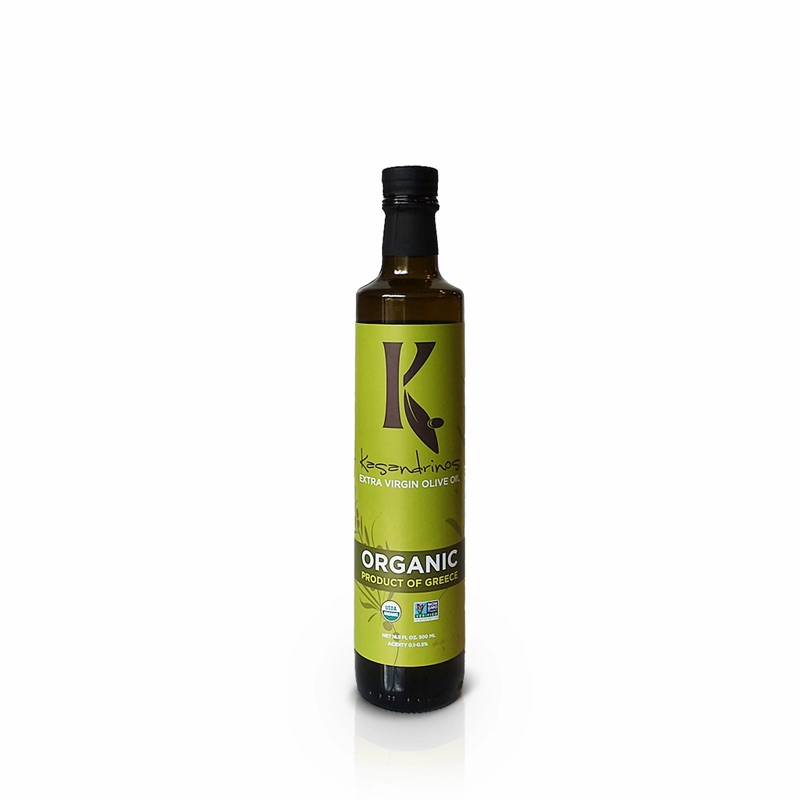
Single-origin Greek organic olive oil in dark glass, with reports on its chemistry, metals, glyphosate and phthalates posted. Mamavation found no phthalates. The maker ordered nearly every test, and at about $64 a liter it is dear.
Best for Readers who want olive oil with its chemistry and contaminant reports on the table, from one named place and in dark glass, and who will pay more for that.
- Our rating
- Good (3.5 of 5)
- Price range
- Premium
- Size
- 500 mL (16.9 fl oz) dark green glass bottle
- Made in
- Sykia, Laconia, Greece; 90% Koroneiki and 10% Athinolia olives
approx. $32 for 500 mL (about $64 a liter); the 1 L bottle is $54 and the 3 L tin $109
See it on Kasandrinos’s site → (opens in a new tab)We are not affiliated with Kasandrinos. This link goes to the maker’s own page, with no tracking code. How we're funded.
Also sold at Amazon ($35 for 500 mL ($34.99), about $3 more than the maker’s $32) .
Reader ratings & reviews
– out of 5
Loading ratings…
Rating breakdown
- 5 stars 0
- 4 stars 0
- 3 stars 0
- 2 stars 0
- 1 star 0
Have this product? Please rate it.
Check your email
We sent a sign-in link to . Click it and you’ll come straight back here, signed in. It expires in 15 minutes; check your spam folder if it doesn’t show up. Thank you for helping the community!
Your review
Reviews are personal experiences, not research, and they never change our quality ratings. Every review is read by our team before it appears.
How we evaluated it
How it scores Our rating, metric by metric
- Freshness & quality 30% of the rating 4 of 5
One place, a harvest date on the bottle per the maker, and acidity 0.27%, peroxide 11.4 and polyphenols 917 mg/kg posted. The peroxide value is inside the limit but not low.
- Independent testing 30% of the rating 3 of 5
Clean results for metals, glyphosate and phthalates, but the maker ordered every lab report except Mamavation’s phthalate tests, which cover one contaminant, come from a site with an affiliate deal with the maker, and no taste panel confirms the grade, so 3 and not 4.
- Packaging 15% of the rating 5 of 5
Dark green glass, and labs found no phthalates in the filled bottle. The cap material is not stated.
- Trust 10% of the rating 3 of 5
No recalls, Prop 65 notices or FDA actions found. The “every batch” and “10 times” claims outrun what is posted, and its main independent tester earns affiliate income from it.
- Value 15% of the rating 2 of 5
About $64 a liter for the 500 mL bottle, and $70 at Amazon. The 1 L bottle is $54 a liter and the 3 L tin about $36 a liter.
The rating, 3.5 of 5, is the weighted average of these scores. See how we rank olive oil and our standard.
Where to buy Stores and the prices we saw
- Amazon (opens in a new tab) approx. $35 for 500 mL ($34.99), about $3 more than the maker’s $32. Sold by Kasandrinos Int’l, the brand’s own storefront, and shipped by Amazon; delivery was estimated at about a week on 2026-10-23. We found no other store: it is not on Walmart or Vitacost.
Prices as we saw them on October 23, 2026. They change often. These links carry no tracking code and earn us nothing.
What’s in it Every ingredient, in label order
- Organic extra virgin olive oil (90% Koroneiki olives, 10% Athinolia olives)
Who tested it What each test found, and who paid for it
- Independent Mamavation (EPA-certified lab, not named; the site earns affiliate income and offers a Kasandrinos discount code) June 2026
Found 194 ppb of total phthalates in a 2024 test, the lowest of 36 olive oils (the range ran to 6,092 ppb). After the maker removed a plastic conveyor belt from its process, Mamavation had two EPA-certified labs test for 19 phthalates and none were detected. Mamavation worked with the maker on that change. Open ↗ (opens in a new tab)
- Maker’s own test Light Labs, Ann Arbor, Michigan (ordered by Kasandrinos; its heavy metals method is within its ISO 17025 scope) January 2026
Lot 227 K/B, 250 mL bottle, January 2026: arsenic, cadmium, lead and mercury not detected (lead limit 5.1 ppb); glyphosate and AMPA not detected (9.9 ppb); 21 of 23 phthalates and plasticizers not detected, two not reported, at limits mostly near 100 ppb. For the 3 L tin (lot 228 K/B) no metals, aluminum or bisphenols were detected. Open ↗ (opens in a new tab)
- Maker’s own test Anresco Laboratories, San Francisco (ISO/IEC 17025 accredited by ANAB; ordered by Kasandrinos) May 2026
Organic EVOO 250 mL bottle, April to May 2026: BBP, DNOP, DINP and DIDP not detected; DBP and DEHP below the 100 ppb limit of quantitation. Open ↗ (opens in a new tab)
- Maker’s own test Fats & Oils Lab, Athens (ordered by Kasandrinos) November 2025
One sample declared as lots 219, 225, 226, 227 and 228 K/B, report of 21 November 2025: free acidity 0.27% (limit 0.8), peroxide value 11.43 (limit 20), K232 2.239 (limit 2.50), K270 0.162 (limit 0.22), delta-K -0.003 (limit 0.01). No taste panel. Open ↗ (opens in a new tab)
- Maker’s own test World Olive Center for Health, Athens (analysis at the University of Athens; ordered by Kasandrinos) October 2025
Certificate C2526-00228, 31 October 2025, for the 2025 to 2026 harvest from Sykea, Laconia: total polyphenols 917 mg/kg, oleocanthal 221 and oleacein 134 mg/kg. One sample. Open ↗ (opens in a new tab)
- Maker’s own test A lab in Sykia, Laconia (sample taken by the owner; ordered by Kasandrinos) January 2024
Fatty acid profile, report of 10 January 2024: oleic acid 76.0%, palmitic 13.1%, linoleic 5.9%, trans fatty acids 0.11%, inside the olive oil limits. It does not identify olive varieties. Open ↗ (opens in a new tab)
- Paid certification USDA organic certificate (certifier not named in the copy posted) November 2025
Kasandrinos International LLC is certified as a handler (first certified 31 October 2024) with extra virgin olive oil in scope. That covers how the oil is handled and labeled, not what a bottle contains. We did not find a certificate for the Greek groves among the files posted. Open ↗ (opens in a new tab)
Who paid, and why it matters
- Independent The tester took no money from the maker for it: a consumer group, a journalist, a university or a regulator.
- Paid certification An outside lab or certifier tested or listed it, and the maker paid for that.
- Maker’s own test A lab report or certificate of analysis the maker commissioned and published.
A certification is a floor, not a verdict: it checks what its program checks and nothing else. We weigh tests by someone with no stake in the result most.
What people ask Worries raised online and elsewhere, and what we found
- Is the polyphenol count real, and is it “10 times” supermarket oil?
- The 917 mg/kg figure is a University of Athens method run for the maker on one sample of the 2025 to 2026 harvest. The certificate compares it with the average of a UC Davis study (135 mg/kg oleocanthal and 105 oleacein, against 221 and 134 here), not with supermarket brands. We found no comparison behind the “10 times” line. Polyphenols fall as oil ages.
- Does it contain phthalates, like most olive oils?
- Not by the tests posted. Mamavation (opens in a new tab) found 194 ppb in 2024 and none detected after the maker removed a plastic conveyor belt. Two of the maker’s labs also found none or less than 100 ppb. Most olive oils in that study had far more.
- Is it really organic and from one place?
- A USDA organic handler certificate is posted for the US company, and the polyphenol certificate names Sykea, Laconia and the Koroneiki and Athinolia blend. The mill is not named, and we found no certificate for the groves.
- Is it adulterated, as so much olive oil is?
- The posted chemistry fits extra virgin olive oil, and the fatty acid profile is inside the limits. But no taste panel is published, no sterol result for spotting added oils is posted, and the claim that every bottle holds only Koroneiki and Athinolia has no variety test behind it.
- Do influencers push it, and are they paid?
- Yes, with disclosure. Mamavation (opens in a new tab) earns affiliate income and shares a 20% code, and blogger Michael Kummer, who met the founder in 2019, earns commission (opens in a new tab) with a 10% code. The company’s site also has an affiliate log-in.
- How long does it keep?
- The maker gives 24 months from the harvest date printed on the bottle and says to finish a bottle within 3 to 6 months of opening. Our olive oil guide advises using oil within a year of harvest.
- Any recalls, lawsuits or warnings?
- None found. The California Prop 65 notice search, the FDA enforcement database and ClassAction.org show nothing for Kasandrinos, searched 23 Oct 2026. We did not search Reddit.
Why we chose it What put it on our list
- It posts the numbers. An Athens fats and oils lab tested the oil in November 2025: free acidity 0.27% (the extra virgin limit is 0.8%), peroxide value 11.4 (limit 20), and UV absorbance inside every limit. The same figures also meet the California Olive Oil Council’s stricter limits of 0.5%, 15 and 2.4.
- Contaminant reports are posted too. For lot 227 K/B, Light Labs found arsenic, cadmium, lead and mercury not detected (lead below 5.1 ppb), glyphosate and its breakdown product AMPA not detected, and 21 of 23 phthalates and plasticizers not detected, with two not reported. Anresco, an accredited lab, found four of six phthalates not detected and the other two below 100 ppb in a 2026 sample.
- The one independent test is clean. Mamavation first found 194 ppb of total phthalates in 2024, the lowest of 36 olive oils; 22 of the 36 had more than 1,200 ppb. After Kasandrinos took a plastic conveyor belt out of its process, Mamavation reported none detected at two EPA-certified labs in June 2026.
- It comes from one place with a harvest date. The oil is from Sykia in Laconia, Greece, hand-picked and pressed within 24 hours, the maker says. It also says the harvest date is printed on the bottle and gives 24 months from that date as the shelf life. We have not seen a bottle.
- The bottle is dark green glass, which blocks light, as our olive oil guide advises. The 3 L size is a tin.
Trade-offs What to weigh before you buy
- Almost every test was ordered by the maker: Light Labs, Anresco, the Athens fats lab and the polyphenol lab all reported to Kasandrinos. The independent phthalate result comes from Mamavation, which earns affiliate income on sales (discount code MAMAVATION) and worked with the maker on the process change.
- The extra virgin grade rests on chemistry alone, because no taste panel result is published. The only fatty acid report posted came from a small lab in the producer’s own village on a sample the owner took in January 2024, and it cannot identify olive varieties.
- Some claims go further than what is posted. The site says every batch is tested for heavy metals, but it posts one bottle lot and one tin lot. It says its polyphenols are up to 10 times those of supermarket oils, and shows no comparison.
- At $32 for 500 mL it is about $64 a liter ($70 at Amazon). The 1 L bottle ($54 a liter) and the 3 L tin ($109, about $36 a liter) cost less per liter. No other olive oil is listed here yet to compare it with.
- The 917 mg/kg polyphenol figure is one analysis of the 2025 to 2026 harvest, and polyphenols fall as oil ages. Our guide says to use oil within a year of harvest, not the 24 months the maker allows.
What to know Details worth knowing first
Most olive oil cannot show you much. Kasandrinos can. Its site posts a lab report on acidity and peroxide, a polyphenol analysis, and heavy metal, glyphosate and phthalate results for the lot we checked. We read them. They are clean, and the oil matches what our olive oil guide asks for: one origin, a harvest date, a dark bottle and a high polyphenol count.
The limits are about who paid. Every report except Mamavation’s was ordered by Kasandrinos. Mamavation earns affiliate income from the brand, and Kasandrinos changed its process after Mamavation’s first test found phthalates. No taste panel has published a grade. That is why we score its testing a 3 and not higher, and why we say the extra virgin grade rests on chemistry.
It costs about $64 a liter in the 500 mL bottle. The 1 L bottle and the 3 L tin cost less per liter. Use it within a year of harvest, as our guide advises, rather than the 24 months the maker allows. For frying and roasting, a refined oil such as avocado oil holds up better.
What we checked Each claim, and how sure we are of it
| What we checked | What we found |
|---|---|
| Extra virgin grade you can check Maker’s claim | Chemistry is inside the extra virgin limits and the California council’s stricter ones (acidity 0.27%, peroxide 11.43, K232 2.239, K270 0.162). No taste panel result is published. |
| Phthalates Verified | Mamavation’s retest at two EPA-certified labs found none detected in June 2026; its 2024 test found 194 ppb. Light Labs and Anresco, ordered by the maker, found none or less than 100 ppb. |
| Heavy metals and glyphosate Maker’s claim | Not detected in lot 227 K/B at Light Labs (lead limit 5.1 ppb; glyphosate 9.9 ppb). The maker ordered these tests and posts one lot. |
| Harvest date and named origin Maker’s claim | Sykia, Laconia, harvest 2025 to 2026 on the polyphenol certificate. The maker says the harvest date is printed on the bottle; we did not see one. |
| Packaging that blocks light Maker’s claim | Dark green glass in the 500 mL size, per the maker. The cap material is not stated. |
| Organic Maker’s claim | USDA organic handler certificate for Kasandrinos International LLC, first certified October 2024. We could not look up the certifier’s own listing. |
What the labels mean
- Verified We opened an independent record that confirms it: a certifier’s listing, a regulator’s list or a lab report. It is linked under Sources.
- Maker’s claim The maker says so on its own page or label. We read it but found no independent record.
- Not verified We looked and could not confirm it, or the maker does not say. Treat it as unknown.
Sources Where our facts come from
- Kasandrinos 500 mL Organic EVOO product page. Maker’s page. $32 on 23 Oct 2026; ingredients, origin, dark glass, harvest-date shelf life. Open ↗ (opens in a new tab)
- Kasandrinos transparency page. Maker’s page. Links the reports below and the maker’s “every batch” and “10x” claims. Open ↗ (opens in a new tab)
- Kasandrinos FAQ. Maker’s page. Quarterly shipments from Greece; 3 to 5 months after opening. Open ↗ (opens in a new tab)
- Light Labs: heavy metals, lot 227 K/B (Jan 2026). Test report. Ordered by the maker. Open ↗ (opens in a new tab)
- Light Labs: glyphosate and AMPA, lot 227 K/B (Jan 2026). Test report. Ordered by the maker. Open ↗ (opens in a new tab)
- Light Labs: phthalates, lot 227 K/B (Jan 2026). Test report. Ordered by the maker. 23 analytes: 21 not detected, 2 not reported. Open ↗ (opens in a new tab)
- Light Labs: heavy metals, aluminum and bisphenols in the 3 L tin (lot 228 K/B). Test report. Ordered by the maker. The aluminum and BPA reports are linked from the transparency page. Open ↗ (opens in a new tab)
- Anresco: phthalates, 250 mL bottle (May 2026). Test report. Ordered by the maker. Open ↗ (opens in a new tab)
- Fats & Oils Lab, Athens: acidity and UV tests (Nov 2025). Test report. Ordered by the maker. Open ↗ (opens in a new tab)
- World Olive Center for Health: polyphenol certificate (Oct 2025). Test report. Ordered by the maker. Open ↗ (opens in a new tab)
- Fatty acid report, Sykia (Jan 2024). Test report. Sample taken by the owner; ordered by the maker. Open ↗ (opens in a new tab)
- USDA organic handler certificate, Kasandrinos International LLC. Maker’s page. Posted by the maker; we could not check the certifier’s own listing. Open ↗ (opens in a new tab)
- Mamavation: Kasandrinos, verified phthalate-free olive oil (June 2026). Test report. Two EPA-certified labs. The site earns affiliate income and shares a discount code with the brand. Open ↗ (opens in a new tab)
- Mamavation: Olive oils tested for toxic phthalates. Test report. 36 olive oils; Kasandrinos listed as non-detect, 194 ppb before its process change. Open ↗ (opens in a new tab)
- California Olive Oil Council: certification process and chemistry limits. Independent source. Free acidity 0.5% or less, peroxide 15 or less, K232 2.4 or less, K270 0.22 or less. Used as a benchmark only. Open ↗ (opens in a new tab)
- Michael Kummer: Kasandrinos Extra Virgin Olive Oil review. Independent source. Affiliate post with a 10% code; the author met the founder in 2019. Open ↗ (opens in a new tab)
- California Attorney General: Prop 65 60-day notice search. Certifier or regulator listing. Searched by alleged violator on 23 Oct 2026: no notice for Kasandrinos. Open ↗ (opens in a new tab)
Alternatives Other options to compare
- Kasandrinos 3 L tin (opens in a new tab) The same oil in a tin, about $36 a liter. The maker posts results for lot 228 K/B in the tin: no heavy metals, aluminum or bisphenols (BPA, BPS, BPF) detected.
- Marianne’s Harvest Classic Avocado Oil For high-heat cooking, where extra virgin olive oil is less stable. A refined oil in dark glass, with UC Davis’s 2020 purity result.