Red light therapy
Red and near-infrared LED devices with measured output, from handheld to full-body.
How we rank red light therapy
- Measured output 30%
- Evidence 25%
- Safety 20%
- Trust 10%
- Value 15%
Why, and what each one means
Makers often print irradiance from a solar power meter, which can read two or more times higher than a lab spectroradiometer, so we score output highest when someone other than the maker measured it at a stated distance. Next we check that wavelengths and doses match the trials (benefits and usage), then electrical safety, flicker and eye protection. A 2026 study found most social media posts promoting at-home devices cite no peer-reviewed study (PubMed (opens in a new tab)).
- Measured output 30%
- Wavelengths and irradiance measured by someone other than the maker, at a stated distance, and matching what the maker claims.
- Evidence 25%
- Wavelengths and doses that match the human trials for what it is sold for, and claims that stay within them.
- Safety 20%
- An electrical safety listing (UL, ETL or CSA), low flicker and low EMF at the stated distance, and eye protection for bright panels.
- Trust 10%
- Highest when the maker names everything, answers questions, and has no recalls, warning letters, Prop 65 notices or lawsuits over safety or labeling. Points come off for unresolved problems and for paid promoters it does not disclose.
- Value 15%
- Price for the treatment area against the others here that pass.
Each product scores every one from 1 to 5, and its rating is the weighted average. We list only products rated 3 or above that break none of our rules.
We avoid
- Irradiance figures with no measuring method or distance.
- Claims to treat disease, burn fat or regrow hair, unless the device is cleared for that use.
- “FDA approved” wording on a device that is only registered.
- Makers that also sell EMF-blocking or “harmonizing” products.
Read the research
Know one that fits? Suggest a product
4 products · best rated first
-
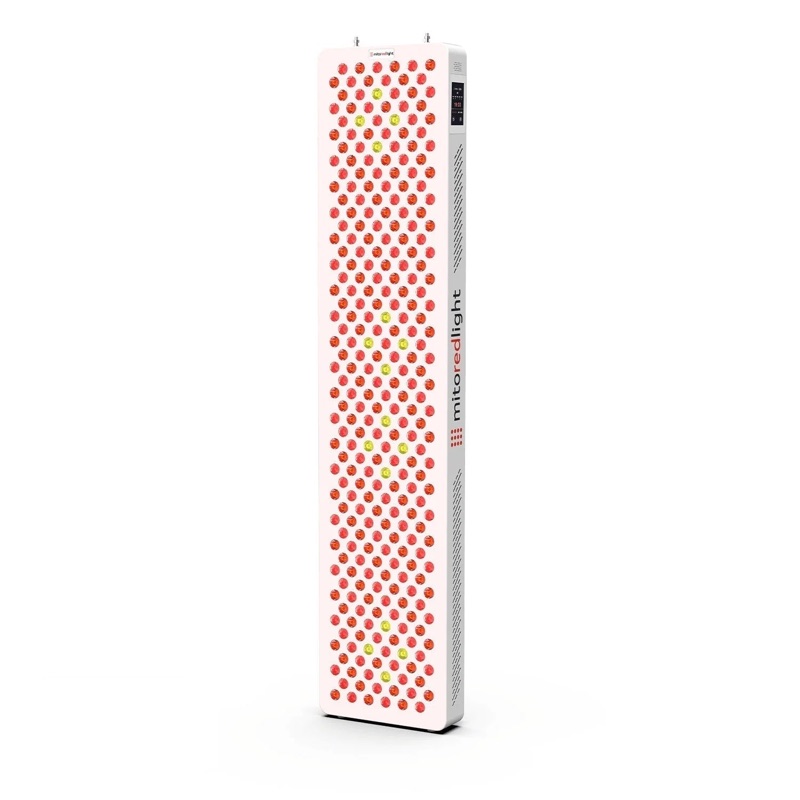 Mito Red Light
 MitoPRO 1500X
A 43-inch plug-in panel with six wavelengths and goggles in the box. An affiliate reviewer measured 68 mW/cm² at 6 inches in 2024 against Mito’s lab average of 53; its LEDs span 7.6 inches. ETL names the model; flicker is not stated. ETL Listed by Intertek as a horticultural luminaire to UL 1598, CAN/CSA C22.2 No. 250.0 and ANSI/CAN/UL 8800 (the directory names MitoPRO 1500X) -
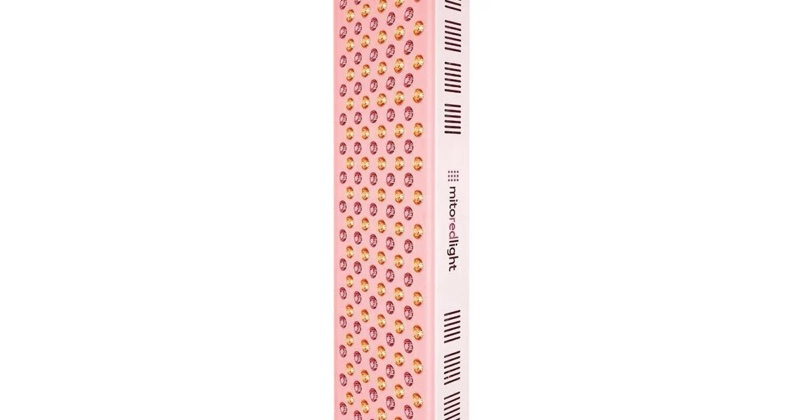 Mito Red Light
 MitoMAX 2.0
A 36-inch plug-in panel whose maker shows a lab irradiance figure (about 56 mW/cm² at 6 inches) beside its solar-meter one, at the lowest price per inch here. The report is not public, flicker is not stated, and Mito’s pages disagree. ETL Listed as a luminaire to UL 1598 (Intertek names MitoMAX 2.0) -
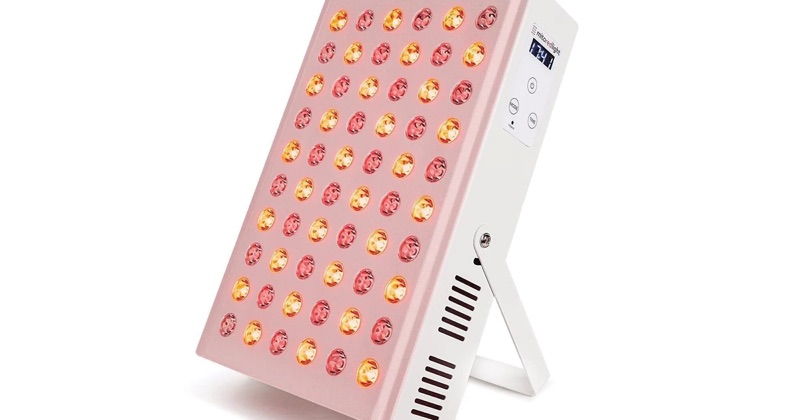 Mito Red Light
 MitoMIN 2.0
A small plug-in panel whose maker shows a lab irradiance figure (about 55 mW/cm² at 6 inches) beside its solar-meter one, at the lowest price per square inch here. The report is not public, flicker is not stated, and Mito’s pages disagree. ETL Listed as a luminaire to UL 1598 (Intertek names MitoMIN 2.0) -
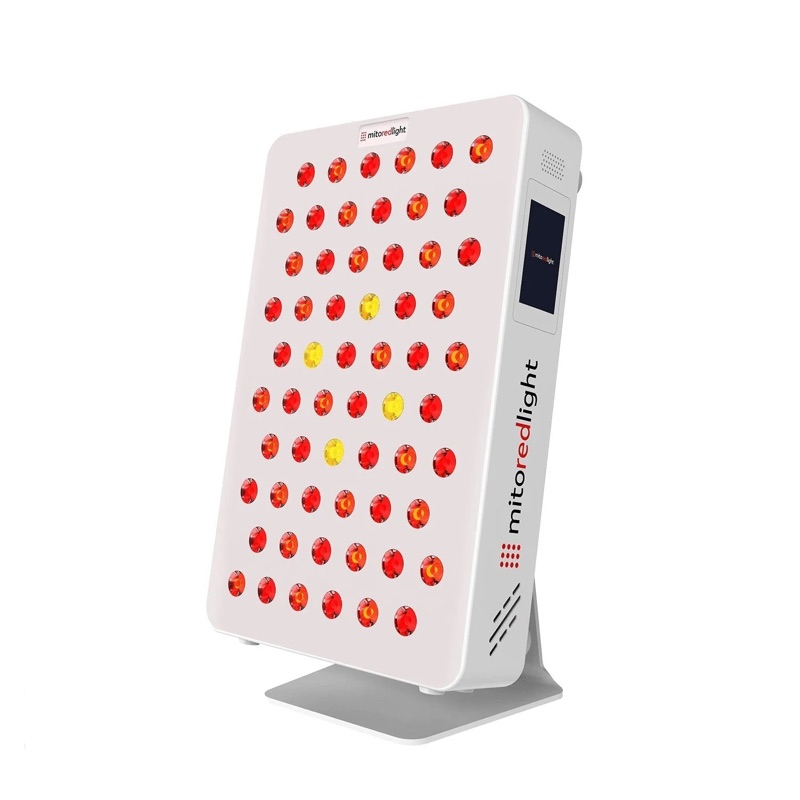 Mito Red Light
 MitoPRO 300X
A small plug-in panel with six wavelengths, goggles in the box and a lab table Mito publishes by report number. An affiliate reviewer measured 52 mW/cm² at 6 inches; Mito’s lab average is 38. ETL-listed as lighting; flicker is not stated. ETL Listed by Intertek as a horticultural luminaire to UL 1598, CAN/CSA C22.2 No. 250.0 and ANSI/CAN/UL 8800 (the directory names MitoPRO 300X)