Products · Cookware · Le Creuset
Le Creuset Signature Round Dutch Oven
Reader ratings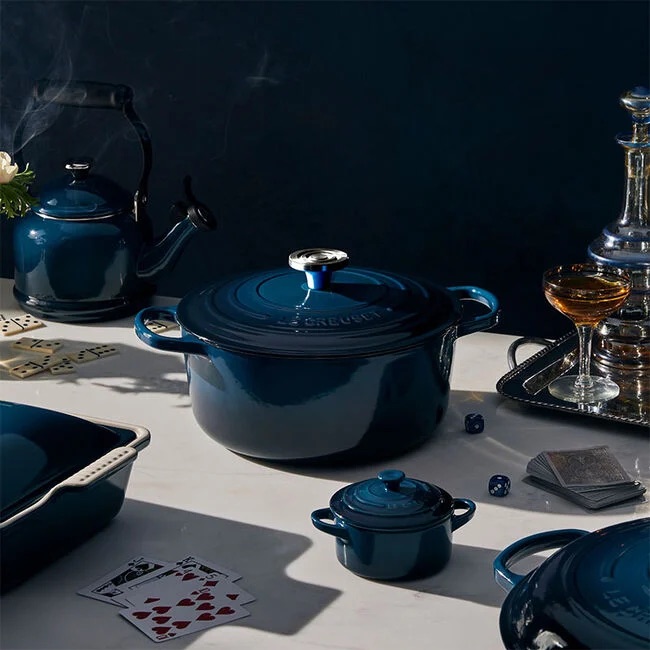
French enameled cast iron with a published chemical disclosure per color. One independent acid test passed, but the enamel holds antimony and nickel and some colors use cadmium pigments. Lifetime limited warranty. About $455 for 5.5 qt.
Best for Cooks who want a heavy enameled pot for braises and bread and will check the disclosure for their color before buying.
- Our rating
- Fair (3.1 of 5)
- Price range
- Premium
- Size
- 2, 4.5, 5.5, 7.25, 9 and 13.25 qt (SKU 21177US covers every size)
- Made in
- France (stated by the maker)
approx. $455 for the 5.5 qt (suggested retail $285 to $680 across sizes, 2 to 13.25 qt)
See it on Le Creuset’s site → (opens in a new tab)We are not affiliated with Le Creuset. This link goes to the maker’s own page, with no tracking code. How we're funded.
Also sold at Sur La Table ($455), Cutlery and More ($455), Kitchen Kapers ($455) .
Reader ratings & reviews
– out of 5
Loading ratings…
Rating breakdown
- 5 stars 0
- 4 stars 0
- 3 stars 0
- 2 stars 0
- 1 star 0
Have this product? Please rate it.
Check your email
We sent a sign-in link to . Click it and you’ll come straight back here, signed in. It expires in 15 minutes; check your spam folder if it doesn’t show up. Thank you for helping the community!
Your review
Reviews are personal experiences, not research, and they never change our quality ratings. Every review is read by our team before it appears.
How we evaluated it
How it scores Our rating, metric by metric
- Cooking surface 40% of the rating 3 of 5
Porcelain enamel on cast iron with a light interior and nothing to season. The food-contact list names nickel and chromium in every record, antimony compounds in most and titanium dioxide in many cream and white interiors, and cadmium pigments are in the full list for some colors. No lead is listed.
- Independent testing 20% of the rating 3 of 5
A Hong Kong Consumer Council acid test (2021) of a Signature round oven found metal release under the ISO 4531 limits for 16 metals. But Lead Safe Mama’s XRF of an older pot read 14,500 to 17,700 ppm cadmium outside and 32 to 34 ppm on the interior, and she says newer pots show trace lead, cadmium and antimony inside, with no readings published.
- Durability 20% of the rating 4 of 5
A limited lifetime warranty for the original owner and French-made cast iron that lasts for decades. Enamel can chip if the pot is dropped or knocked, and abuse and overheating are excluded.
- Trust 10% of the rating 3 of 5
Publishes a color-by-color chemical disclosure. No Prop 65 notice about cookware, and one 2011 CPSC recall for glass lids. The product page itself is silent on lead and cadmium.
- Value 10% of the rating 2 of 5
$455 for the 5.5 qt, about five times Lodge’s 6 qt enameled pot ($89.90), with no independent test showing the extra money buys cleaner enamel.
The rating, 3.1 of 5, is the weighted average of these scores. See how we rank cookware and our standard.
Where to buy Stores and the prices we saw
- Sur La Table (opens in a new tab) approx. $455. The 5.5 qt in 16 colors. Most are $454.95; Shallot is $434.95 and Olive $363.96. Check your color in Le Creuset’s disclosure.
- Cutlery and More (opens in a new tab) approx. $455. Sold one color per page (Licorice shown, $454.95); its UPC matches Le Creuset’s disclosure record for that color.
- Kitchen Kapers (opens in a new tab) approx. $455. The 5.5 qt in 8 colors on one page, all $454.95.
Prices as we saw them on October 23, 2026. They change often. These links carry no tracking code and earn us nothing.
What it’s made of What touches your food, water, skin or air
- Cast iron body, enameled inside and out with porcelain enamel (interior listed as sand, cream or white depending on the color; one record lists black)
- Food-contact enamel, per Le Creuset’s disclosure for the 5.5 qt Licorice and Flame: silica, boric acid, disodium tetraborate, iron, copper, chromium, manganese, nickel, phosphorus and antimony compounds
- Titanium dioxide in the food-contact list of 30 of the 63 records, all with cream or white interiors (no sand or black interior lists it); antimony compounds in the food-contact list of 40 of the 63
- Cadmium pigments in the full list, not the food-contact list, for some exterior colors (Flame, Cerise, Flamme Dorée, Nectar, Olive, Cayenne, Garnet)
- Lid knob material is not stated on the page we read
Who tested it What each test found, and who paid for it
- Independent Consumer Council (Hong Kong) November 2021
Tested seven cast iron pots in 2021. In an acid-release test (3% acetic acid, 95°C, 2 hours, 16 metals, ISO 4531) the Le Creuset enameled pot, with Lagostina and Staub, released metals below the limits; two other enameled pots exceeded them. The Council’s product table names the sample as a Signature Round Casserole/Oven, 22 cm, with a light interior; it does not name the color. A release test in a lab, not a measure of what reaches food in a kitchen. Open ↗ (opens in a new tab)
- Independent Lead Safe Mama (XRF screening; the site earns affiliate income) February 2019
XRF readings of a Le Creuset yellow oval enameled cast iron casserole made around 2013: cadmium 14,500 ppm on the lid edge and 17,700 ppm on the exterior, and 32 to 34 ppm on the white interior food surface, with antimony about 330 to 350 ppm and nickel about 150 to 170 ppm. No lead was detected on the interior. Total content of an older, brightly colored pot, not release, and not the current Signature line. The tester’s overview says newer, lighter-colored pieces read much lower; in a 2023 comment she says she still finds trace lead, cadmium and antimony inside newer pieces, with no readings published. Open ↗ (opens in a new tab)
Who paid, and why it matters
- Independent The tester took no money from the maker for it: a consumer group, a journalist, a university or a regulator.
- Paid certification An outside lab or certifier tested or listed it, and the maker paid for that.
- Maker’s own test A lab report or certificate of analysis the maker commissioned and published.
A certification is a floor, not a verdict: it checks what its program checks and nothing else. We weigh tests by someone with no stake in the result most.
What people ask Worries raised online and elsewhere, and what we found
- Is there cadmium or lead in the enamel?
- Le Creuset’s own disclosure (opens in a new tab) lists no lead for the 5.5 qt pot. It lists cadmium pigments in the full list, not the food-contact list, for Cerise, Flame, Flamme Dorée, Nectar and Olive, as well as Cayenne and Garnet records. Lead Safe Mama (opens in a new tab) found very high cadmium on the outside of older yellow pots and trace cadmium on the interior. Those readings are total content, not what comes out in cooking. In a 2023 comment on that page the tester says she consistently finds trace lead, cadmium and antimony on the food-contact interiors of newer pieces, and in December 2025 that she finds traces of antimony in almost all of them. She publishes no readings for this pot, so we could not check it.
- Does it release metals into acidic food?
- In the Hong Kong Consumer Council’s 2021 acid test (opens in a new tab) a Le Creuset Signature round oven (22 cm) stayed under the limits. A Japanese study (opens in a new tab) of enameled cookware found low elution overall, with cadmium and lead below standard levels and aluminum, nickel and antimony higher. We found no release test of this exact pot.
- What else is in the enamel?
- The disclosure’s food-contact list for the 5.5 qt Licorice and Flame records names silica, boric acid, disodium tetraborate, iron, copper, chromium, manganese, nickel, phosphorus and antimony compounds. Across all 63 records for the 5.5 qt pot, antimony compounds appear in the food-contact list of 40, and titanium dioxide in 30, all with cream or white interiors. Mamavation (opens in a new tab) puts Le Creuset in its “not our favorite” group, citing the silica dust and antimony in its disclosure and saying enamel makes heavy metals more likely.
- Which colors should I check?
- Look up your color and size in the disclosure database (opens in a new tab) first. In the 5.5 qt records we opened, Licorice, White, Marseille, Oyster, Sea Salt and Thyme list no cadmium. The same color can have several records with different lists (for example one Licorice record names antimony compounds and two do not), so match the SKU or UPC on the box to its record. The page also offers Onyx and Château, which we did not find a record for, so ask before buying those.
Why we chose it What put it on our list
- The material is simple and stated: enameled cast iron made in France, with a “light colored smooth interior enamel” and no coating that needs seasoning.
- An independent consumer body’s acid test (Hong Kong Consumer Council, 2021) found a Le Creuset pot released metals below the ISO 4531 limits.
- Le Creuset publishes a searchable chemical disclosure (California AB 1200) for each color and size. In all 63 records for the 5.5 qt pot, which we opened on 22 and 23 October, the food-contact list has no lead and no cadmium, and none lists a fluorinated compound.
- Limits are written down: all stovetops including induction, oven safe to 500°F, dishwasher safe with hand washing recommended.
- The warranty is spelled out: free from defects in material and workmanship at purchase, for the original consumer owner. It excludes abuse, overheating, commercial use and use against the instructions, and ends if the pot is sold.
Trade-offs What to weigh before you buy
- Cadmium pigments appear for some colors. In the 5.5 qt records the full list, but not the food-contact list, adds them for Cerise, Flame, Flamme Dorée, Nectar and Olive, and for Cayenne and Garnet, which are in the database but not on the page. Colors such as Licorice, White, Marseille, Oyster, Sea Salt and Thyme list none.
- The food-contact list names nickel and chromium in every record, antimony compounds in 40 of the 63, and titanium dioxide in 30 (all cream or white interiors). The disclosure is Le Creuset’s statement of what it added, with no amounts. Le Creuset says only that it does “internal and reputable third-party laboratory evaluations”, and none is published.
- Independent XRF screens of older, brightly colored Le Creuset pots found cadmium at 14,500 to 17,700 ppm on the outside and 32 to 34 ppm inside. We found no published screen of a current Signature pot, though the same tester says in comments that newer pieces show trace lead, cadmium and antimony inside.
- It is expensive and heavy, and the enamel can chip if the pot is dropped or knocked. Suggested retail prices run from $285 for the 2 qt to $680 for the 13.25 qt.
What to know Details worth knowing first
Enameled cast iron is the option in our cookware guide for long, acidic cooking, because the glass-like enamel does not react with food and, in a lab test our cast iron article cites, released almost no iron. Le Creuset is the best-known maker, and this pot is made in France.
What sets it apart is the paper trail. Le Creuset publishes a chemical disclosure for each color and size in its disclosure database (opens in a new tab), and in every record we opened for the 5.5 qt pot the food-contact list has no lead and no cadmium. A 2021 Hong Kong Consumer Council acid test found a Le Creuset pot under international release limits.
But enamel is a mix of metal compounds. The food-contact list names antimony, nickel and chromium, and for Cerise, Flame, Flamme Dorée, Nectar and Olive the full list adds cadmium pigments outside the cooking surface (see cadmium in food). A lead-safety tester found very high cadmium on the outside of older yellow pots and traces inside, and says newer pieces still show traces inside, though she publishes no readings for them. If you buy one, choose a color whose record lists no cadmium, such as Licorice, White or Marseille. Whether enamel belongs on a list that prizes the fewest chemicals is a question for readers: bare cast iron has none of this.
What we checked Each claim, and how sure we are of it
| What we checked | What we found |
|---|---|
| No PTFE or PFAS coating Maker’s claim | Porcelain enamel on cast iron. None of the disclosure records we opened lists a fluorinated compound. This is the maker’s disclosure. |
| Plain, named materials Maker’s claim | Enameled cast iron, made in France, per the page’s specifications. The disclosure database lists the enamel’s constituents by color and size. |
| Built to last Maker’s claim | Enameled Cast Iron Lifetime Limited Warranty: covers defects in material and workmanship at purchase, for the original consumer owner. Excludes abuse, overheating, commercial use and use against the instructions. |
| Fits how you cook Maker’s claim | All cooktops including induction. Oven safe to 500°F. Dishwasher safe, hand washing recommended. |
| Lead and cadmium in the enamel (maker’s disclosure) Maker’s claim | Food-contact lists in all 63 records for the 5.5 qt pot show no lead and no cadmium. The full lists add cadmium pigments for Cerise, Flame, Flamme Dorée, Nectar, Olive, Cayenne and Garnet. Not a lab result. |
| Independent acid-release test Verified | A Hong Kong Consumer Council test (2021) found a Le Creuset enameled pot under the ISO 4531 limits for 16 metals in 3% acetic acid at 95°C. The model is not named in the text we read. |
| Independent XRF screen Verified | An older yellow Le Creuset casserole read 14,500 to 17,700 ppm cadmium outside and 32 to 34 ppm on the interior, with no lead detected inside (Lead Safe Mama, 2019). Total content, not release. |
| Notices and recalls Verified | No California Prop 65 notice names Le Creuset cookware. One 2025 notice, about thermal receipt paper in stores, names Le Creuset of America among many retailers. CPSC lists a 2011 recall of Le Creuset glass lids, not the enameled cast iron lid. |
What the labels mean
- Verified We opened an independent record that confirms it: a certifier’s listing, a regulator’s list or a lab report. It is linked under Sources.
- Maker’s claim The maker says so on its own page or label. We read it but found no independent record.
- Not verified We looked and could not confirm it, or the maker does not say. Treat it as unknown.
Sources Where our facts come from
- Le Creuset Signature Round Dutch Oven product page. Maker’s page. Suggested retail $364 to $525 for the 5.5 qt depending on color; $455 for the colors we checked. Open ↗ (opens in a new tab)
- Le Creuset Chemical Disclosures for Cookware. Maker’s page. Open ↗ (opens in a new tab)
- Disclosure records: Signature Round Dutch Oven, 5.5 qt (all 63 records). Maker’s page. Le Creuset’s legal disclosure, hosted on a catalog service. We opened every record on 22 and 23 Oct 2026. Each has a “CA AB1200 Chemicals - All” list and a “Food Contact” list. Open ↗ (opens in a new tab)
- Disclosure record: Signature Round Dutch Oven, 5.5 qt, Licorice. Maker’s page. Sand interior. Food-contact list: silica, boric acid, disodium tetraborate, iron, copper, chromium, manganese, nickel, phosphorus, antimony compounds. No lead or cadmium. Open ↗ (opens in a new tab)
- Disclosure record: Signature Round Dutch Oven, 5.5 qt, Flame. Maker’s page. Cadmium sulphoselenide red and orange and cadmium zinc sulphide yellow pigments are in the full list, not the food-contact list. Open ↗ (opens in a new tab)
- Le Creuset warranty details. Maker’s page. The enameled cast iron terms are in a collapsed section of the page. Open ↗ (opens in a new tab)
- Consumer Council (Hong Kong): metal release of 4 cast iron cooking pots exceeded limits by up to 54 times (press release, 15 November 2021). Test report. The English release does not name brands. Open ↗ (opens in a new tab)
- Consumer Council (Hong Kong): CHOICE 541 cast iron cooking pots, test results (Chinese). Test report. Names Le Creuset as enameled sample #2, with Lagostina and Staub under the ISO 4531 limits. The model is in the Council’s product table, linked next. Open ↗ (opens in a new tab)
- Consumer Council (Hong Kong): CHOICE 541 cast iron cooking pots, product table (Chinese). Test report. Lists the Le Creuset sample as Signature Round Casserole/Oven 22cm, HK$2,788. Open ↗ (opens in a new tab)
- Lead Safe Mama: Made in France (c. 2013) yellow oval Le Creuset enameled cast iron casserole, 17,700 ppm cadmium. Test report. Full XRF readings. Tamara Rubin earns affiliate income elsewhere on her site and has called for a boycott of Le Creuset. XRF measures total content, not release. Open ↗ (opens in a new tab)
- Lead Safe Mama: Le Creuset overview. Independent source. Summarizes her tests of Le Creuset pieces and says newer, lighter colors read lower. Written before Le Creuset published its disclosure database. Her replies in the comments (March 2023, December 2025) say newer pieces still show trace lead, cadmium and antimony on food-contact interiors. Open ↗ (opens in a new tab)
- Mamavation: Safest Cast Iron Cookware Investigation (5 October 2026). Independent source. Lists Le Creuset as “not our favorite” because it is enameled, citing silica dust and antimony in its disclosure. Not a lab test. The site earns affiliate income. Open ↗ (opens in a new tab)
- PubMed: Fifteen trace elements in eluate from enameled cookware using ICP-MS (Manaka et al., 2011). Independent source. Open ↗ (opens in a new tab)
- California Attorney General: Prop 65 60-day notice search. Certifier or regulator listing. Searched by alleged violator on 23 Oct 2026. The one notice naming Le Creuset of America, 2025-02130 (30 June 2025), concerns bisphenol S in thermal receipt paper. Open ↗ (opens in a new tab)
- CPSC: Le Creuset Recalls Glass Lids Due to Laceration Hazard (23 Feb 2011). Certifier or regulator listing. Covers 24, 28 and 30 cm glass lids sold after October 2010. Open ↗ (opens in a new tab)
Alternatives Other options to compare
- Staub La Cocotte round Dutch oven (opens in a new tab) Also made in France, with a black enamel interior. It was one of the pots under the limits in the same Hong Kong test. We found no chemical disclosure page for it.
- A bare cast iron skillet No enamel, so none of these metals in a glaze. Field’s No. 8 is about $165 and Lodge’s Classic about $25.