Cookware
Pans and pots without non-stick coatings, made from materials that last for decades.
How we rank cookware
- Cooking surface 40%
- Independent testing 20%
- Durability 20%
- Trust 10%
- Value 10%
Why, and what each one means
We rank cookware first on what touches the food (40%): bare iron, carbon steel, stainless steel or lead-free enamel, never PTFE or sol-gel “ceramic”. Metal still comes out of pans: oiling cast iron cut arsenic, cadmium and chromium release in a Korean study (opens in a new tab), and new stainless steel leaches nickel and chromium (opens in a new tab). So independent tests count next (20%), then durability, trust and price. See our cookware guide.
- Cooking surface 40%
- Stainless steel, cast iron, carbon steel, glass or lead-free enamel touches the food. No PTFE or other PFAS, and no sol-gel “ceramic” nonstick, which wears off.
- Independent testing 20%
- Highest for independent lead and cadmium tests of the enamel or glaze (XRF screening or lab tests) with clean results.
- Durability 20%
- Built to last and to be repaired: a long warranty, parts sold separately and a maker that services what it sells.
- Trust 10%
- Highest when the maker names everything, answers questions, and has no recalls, warning letters, Prop 65 notices or lawsuits over safety or labeling. Points come off for unresolved problems and for paid promoters it does not disclose.
- Value 10%
- Price against pans of the same size and material that pass.
Each product scores every one from 1 to 5, and its rating is the weighted average. We list only products rated 3 or above that break none of our rules.
We avoid
- PTFE (“Teflon”) and other fluoropolymer non-stick coatings.
- “Ceramic” non-stick coatings, even with lab results: the coating wears, and major brands warrant it for only one to two years.
- Any coating that is scratched, flaking or peeling.
- “Non-toxic” claims with no composition or test data behind them.
Read the research
Know one that fits? Suggest a product
14 products · best rated first
-
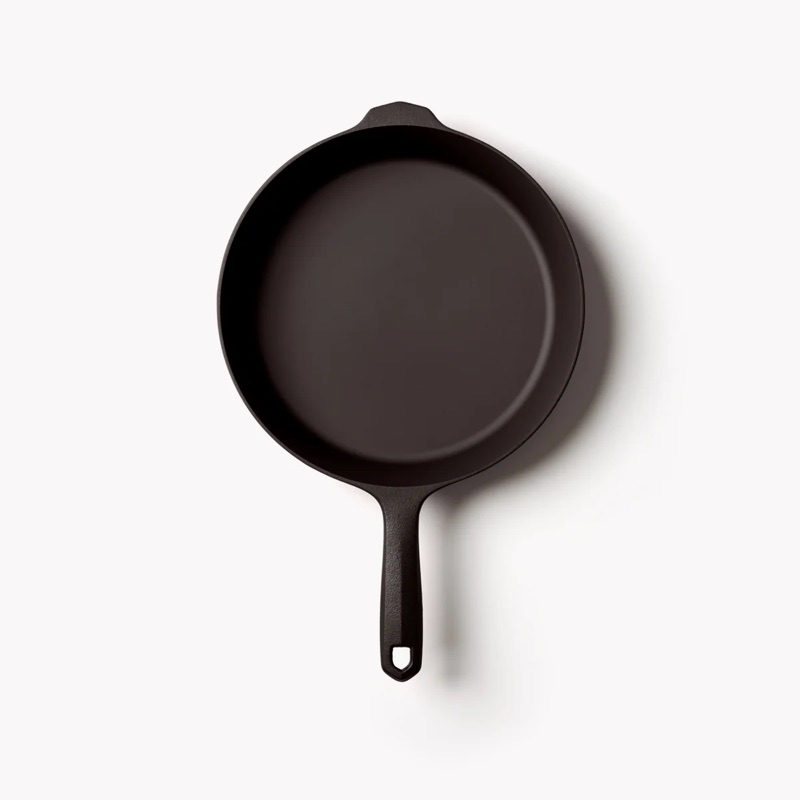 Field Company
 No. 8 Cast Iron Skillet
Polished, lighter cast iron made in the USA from recycled iron and seasoned with organic grapeseed oil. Mamavation says an XRF screen found no lead. It has a published lifetime warranty and costs about $165. -
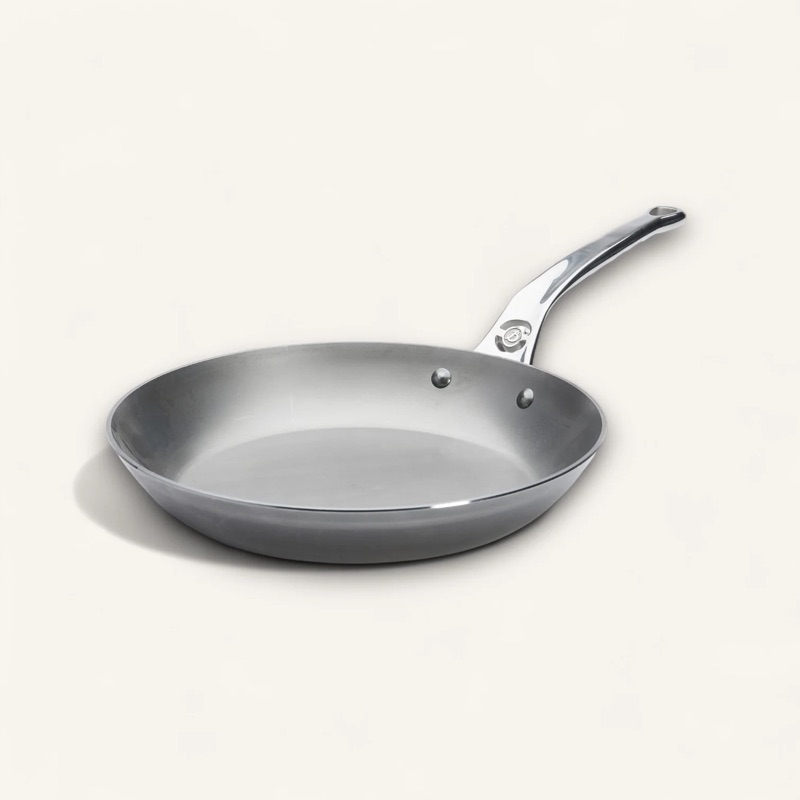 de Buyer
 Mineral B Pro Carbon Steel Fry Pan, 11 inch
A plain carbon steel pan, 99% iron and 1% carbon, made in France with no coating. An independent XRF screen of two de Buyer pans found no lead, cadmium, mercury or arsenic. You season it yourself. About $145 for 11 in. -
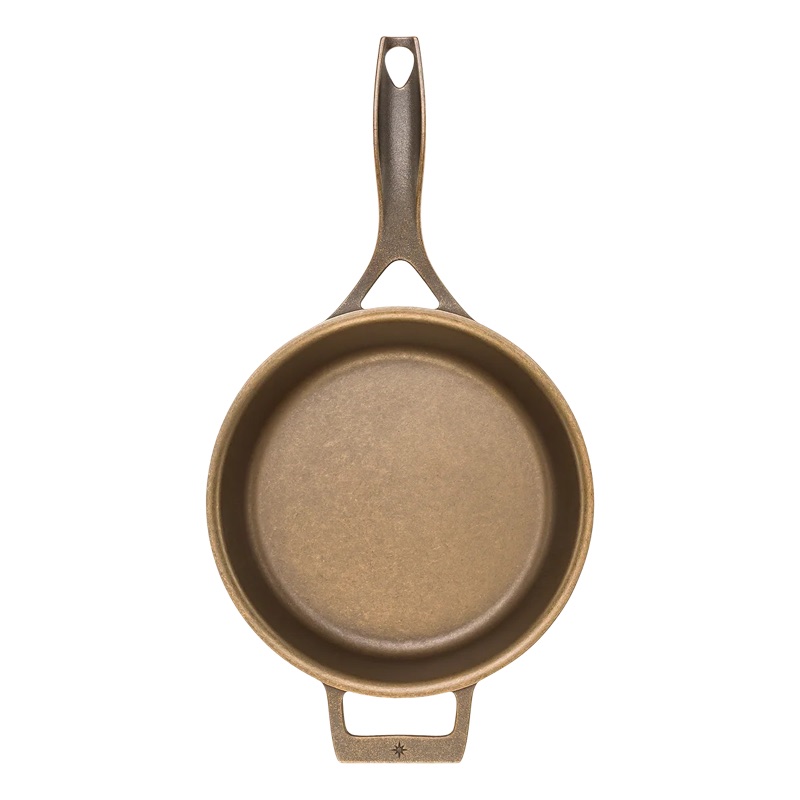 Stargazer Cast Iron
Stargazer 10.5-Inch Cast Iron Skillet, seasoned
Smooth, light US-made cast iron seasoned with a non-GMO oil blend. One Lead Safe Mama XRF screen (2019, a gifted pan) found no lead, cadmium, mercury or arsenic. Lifetime warranty with published terms. About $155. -
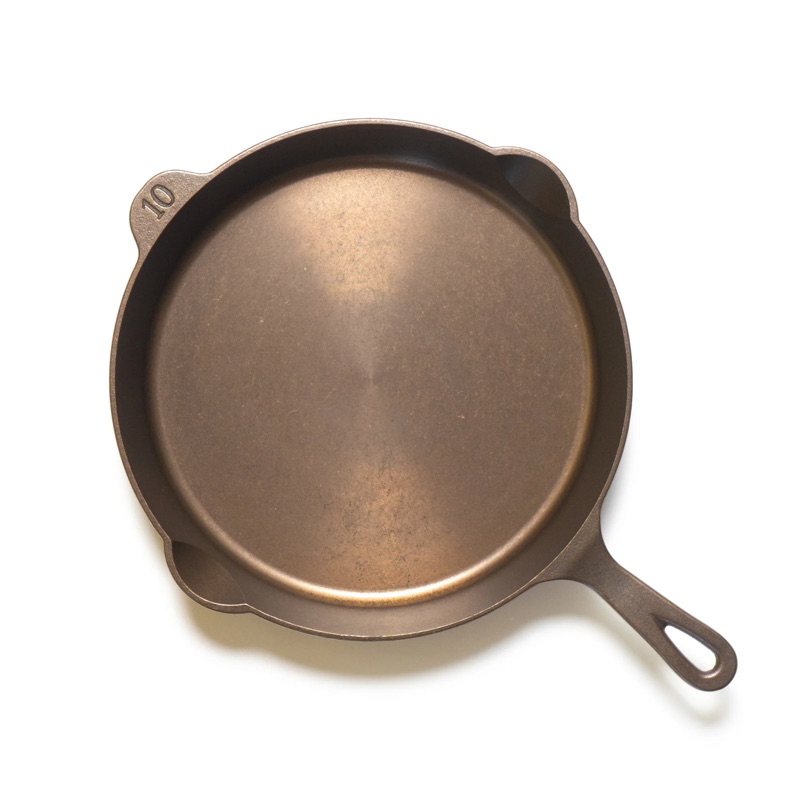 Lancaster Cast Iron
Lancaster No. 10 Cast Iron Skillet, 11 5/8 in, pre-seasoned
Polished, lighter cast iron made in Pennsylvania and seasoned with grapeseed oil. Mamavation says an XRF screen found no lead in any part of the pan but shows no readings. Lifetime warranty against defects. About $225. -
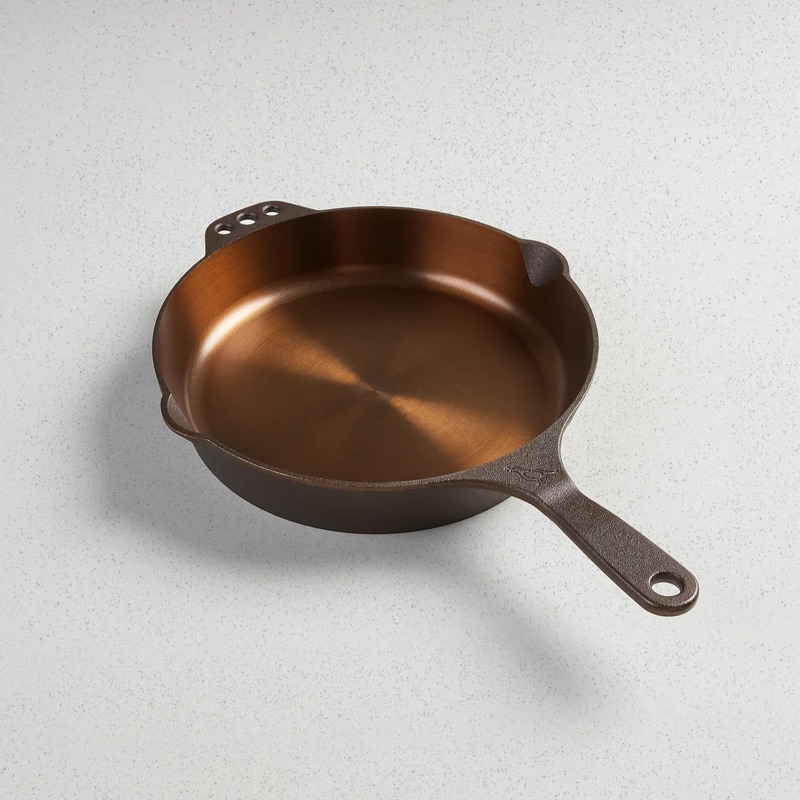 Smithey Ironware
 No. 10 Cast Iron Skillet
A polished, pre-seasoned cast iron skillet made in the USA, seasoned with grapeseed oil. Two independent XRF screens found no lead. Its guarantee terms are not published. About $180, six times a Lodge skillet. -
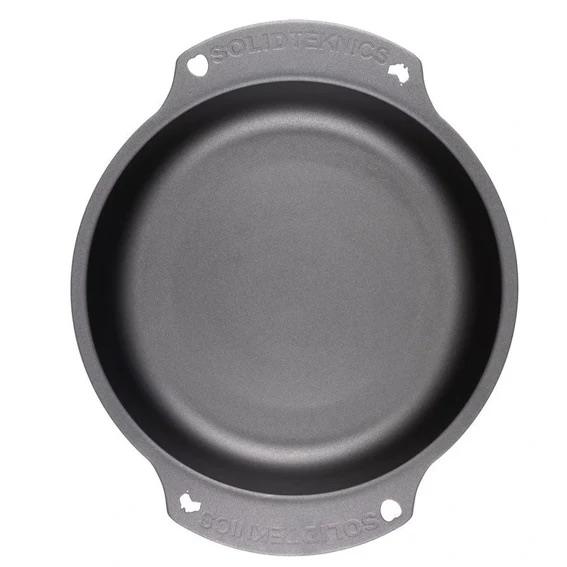 Solidteknics
 AUS-ION Lightning 10.2 in (26 cm) Dual Handle Oven-to-Table Iron Pan, QL226d
Lightweight iron pan formed from one sheet of Australian iron and seasoned with rice bran oil, with no coating. Two outside XRF screens found no lead in Solidteknics pans, but not this model. A multi-century warranty. About $196. -
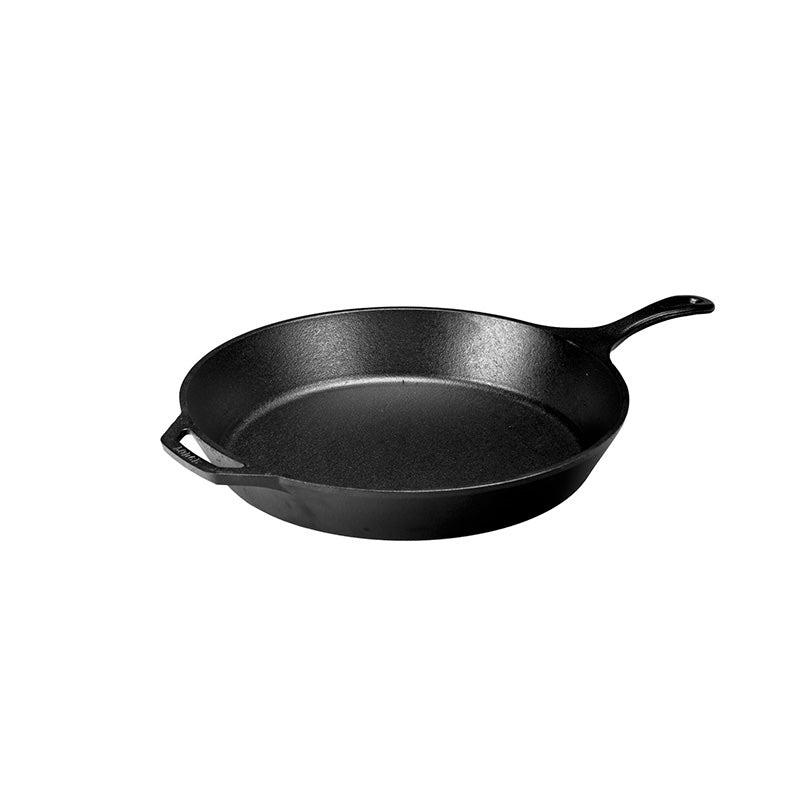 Lodge
Lodge Classic Cast Iron Skillet, 10.25 inch
Plain seasoned cast iron, about $25, made in Tennessee and seasoned with soybean oil. No published test of this skillet; a Hong Kong test of a different Lodge pot found no lead but metal release above a European guide. -
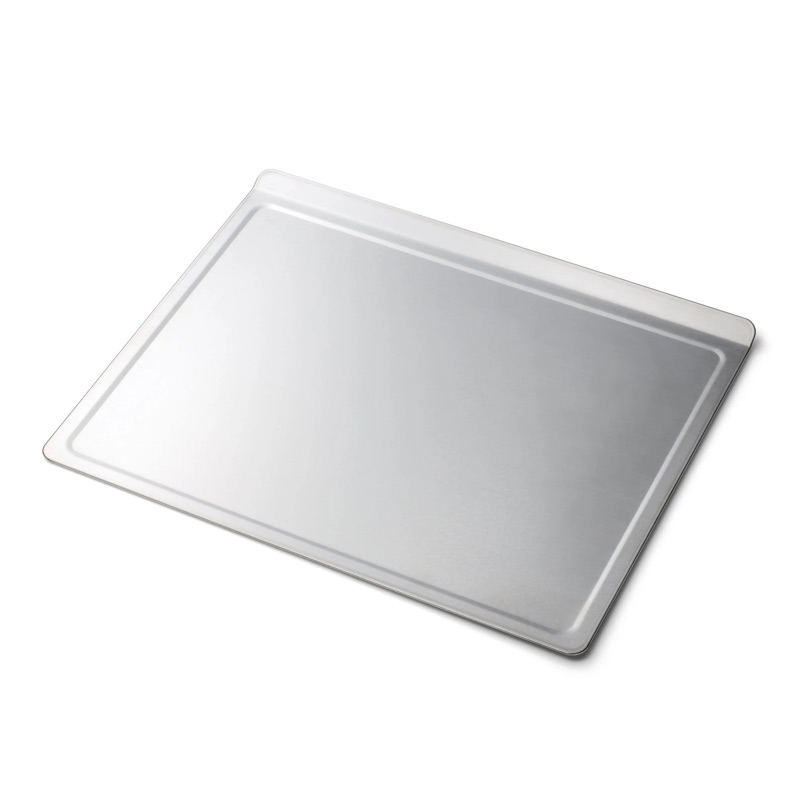 360 Cookware
 Stainless Steel Large Cookie Sheet, 17.5 x 14.22 in
Uncoated 304 stainless sheet around an aluminum core. Lead Safe Mama's readings found no lead, cadmium, mercury or arsenic, but 360 sponsors that tester and sent the sheets. Lifetime warranty; made in Wisconsin. About $150. -
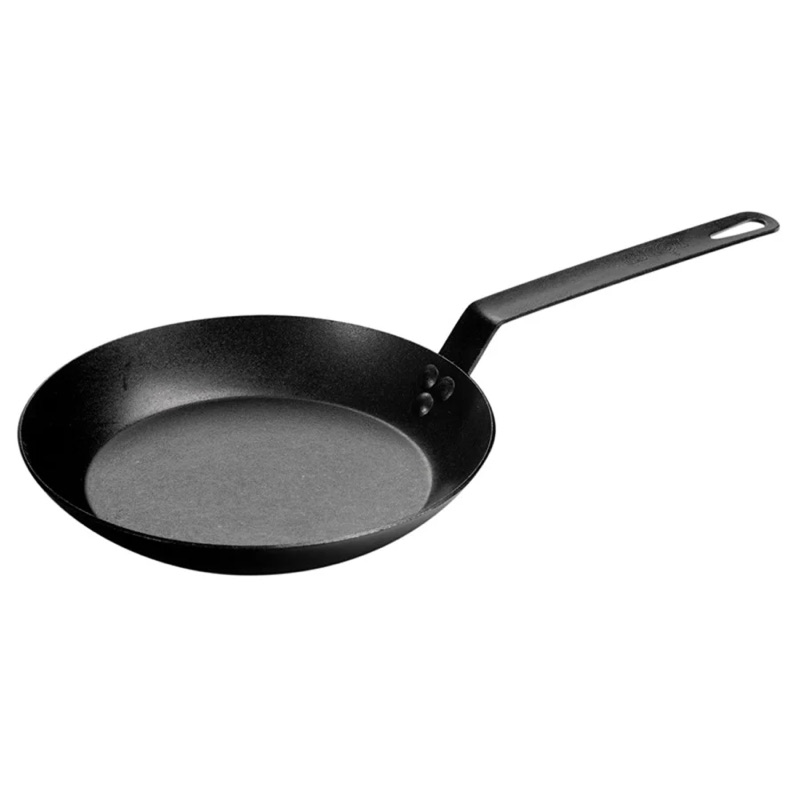 Lodge
Lodge Seasoned Carbon Steel Skillet, 10 inch
A seasoned carbon steel skillet with no coating, about $45 for 10 in, made in Tennessee and seasoned with soybean oil. We found no published test of it, and Lodge gives no steel composition. The cheapest carbon steel here. -
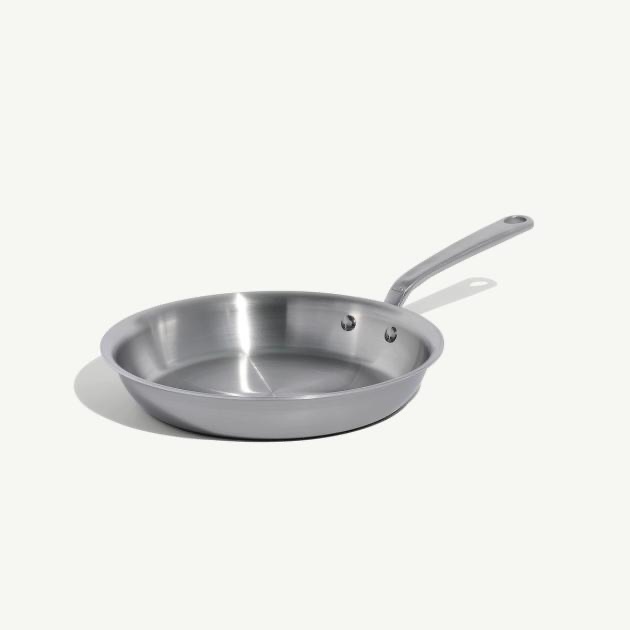 Made In
 Stainless Clad Frying Pan, 10 inch
An uncoated 5-ply stainless steel pan made in Italy, with a lifetime warranty. Its only testing is a PFAS and bisphenol report Made In ordered, with no nickel or chromium results. About $139 for 10 in. -
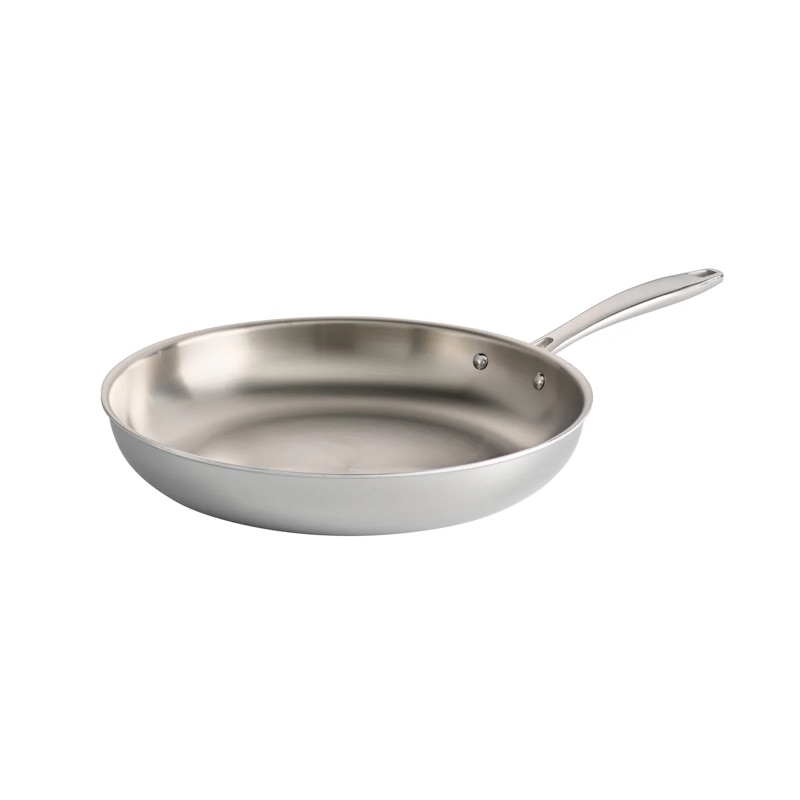 Tramontina
 Signature Tri-Ply Clad Stainless Steel Fry Pan, 12 inch
An uncoated stainless steel pan with an aluminum core between 18/10 layers, about $55 for 12 in. NSF lists it. No independent test, no origin on the page, and the NSF listings point to China and to Brazil. NSF/ANSI 2 (Food Equipment) listing -
 All-Clad
 D3 Stainless Fry Pan with Lid, 12 inch
Uncoated tri-ply stainless steel with an aluminum core, made in Pennsylvania with global components. No published test, the steel grade is not stated, and an unconfirmed 2022 screen of its saucepans is still open. About $150 with lid. -
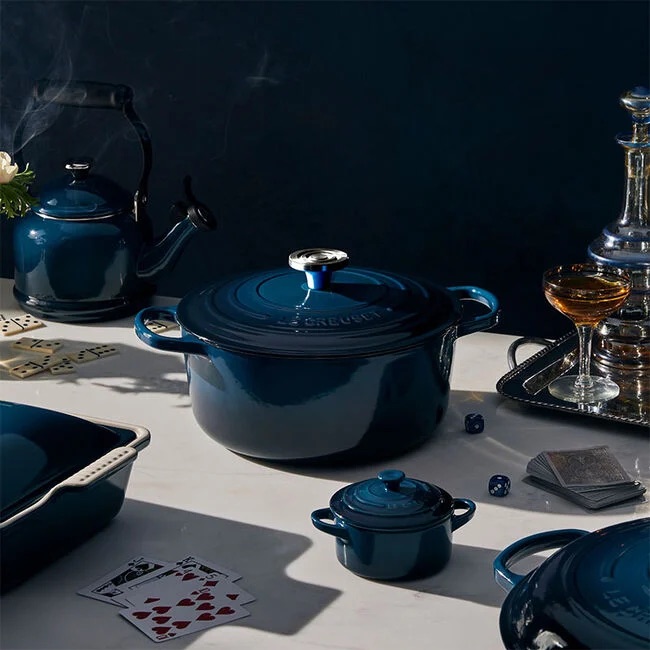 Le Creuset
 Signature Round Dutch Oven
French enameled cast iron with a published chemical disclosure per color. One independent acid test passed, but the enamel holds antimony and nickel and some colors use cadmium pigments. Lifetime limited warranty. About $455 for 5.5 qt. -
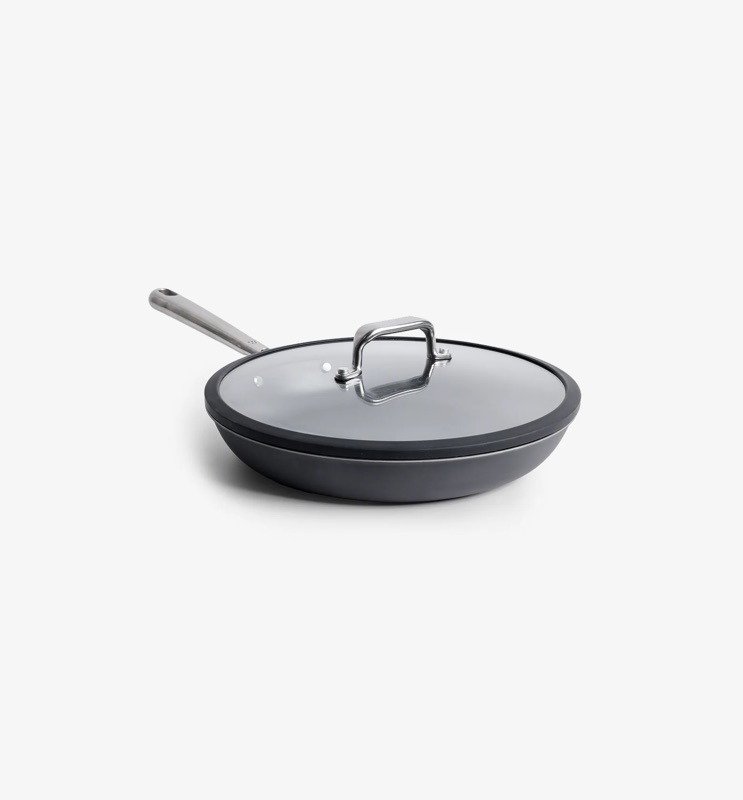 Misen
Misen Pre-Seasoned Carbon Steel Frying Pan with Glass Lid, 10 inch
An uncoated carbon steel pan seasoned with corn oil, with a glass lid, oven safe to 500°F, made in China. Nobody has published a test of it, and Misen gives no steel composition. A lifetime limited warranty. About $139.