Kitchen tools & cleanup
Utensils, boards, brushes, sponges and cloths made from materials that do not shed plastic into food.
How we rank kitchen tools & cleanup
- Materials 45%
- Independent testing 10%
- Durability 20%
- Trust 10%
- Value 15%
Why, and what each one means
We weigh materials most, because tools touch food and wear into it. Plastic cutting boards shed particles into meat (study (opens in a new tab)) and some black plastic utensils carry flame retardants (study (opens in a new tab); see our cutting-board guide). Wire grill brushes have put bristles in people's throats and bowels (CDC report (opens in a new tab), 2026 study (opens in a new tab)). Glue and finish are the unknowns, so we reward makers who name them and publish independent tests.
- Materials 45%
- Untreated wood, natural fiber, plain steel or cellulose. No plastic bristles or scrubbers, PFAS coatings or finishes we cannot name.
- Independent testing 10%
- Highest when someone the maker does not pay (a consumer group, journalist, university or regulator) has tested it for the contaminants that matter here and published clean results. A certification the maker pays for, or the maker’s own lab reports, count for less, and claims with nothing published count for little.
- Durability 20%
- How long it lasts in daily use, and whether it can be composted or recycled at the end.
- Trust 10%
- Highest when the maker names everything, answers questions, and has no recalls, warning letters, Prop 65 notices or lawsuits over safety or labeling. Points come off for unresolved problems and for paid promoters it does not disclose.
- Value 15%
- Price per month of use against the others here that pass.
Each product scores every one from 1 to 5, and its rating is the weighted average. We list only products rated 3 or above that break none of our rules.
We avoid
- Wire-bristle grill brushes, which can shed bristles onto the grate and into food.
- Wood or bamboo boards and utensils that do not name the glue and the finish.
- Polyurethane sponges sold as “eco” or “natural”, and sponges or cloths treated with antibacterial chemicals such as triclosan or silver.
- Bamboo-fiber “eco” tableware bound with melamine resin.
Read the research
Know one that fits? Suggest a product
8 products · best rated first
-
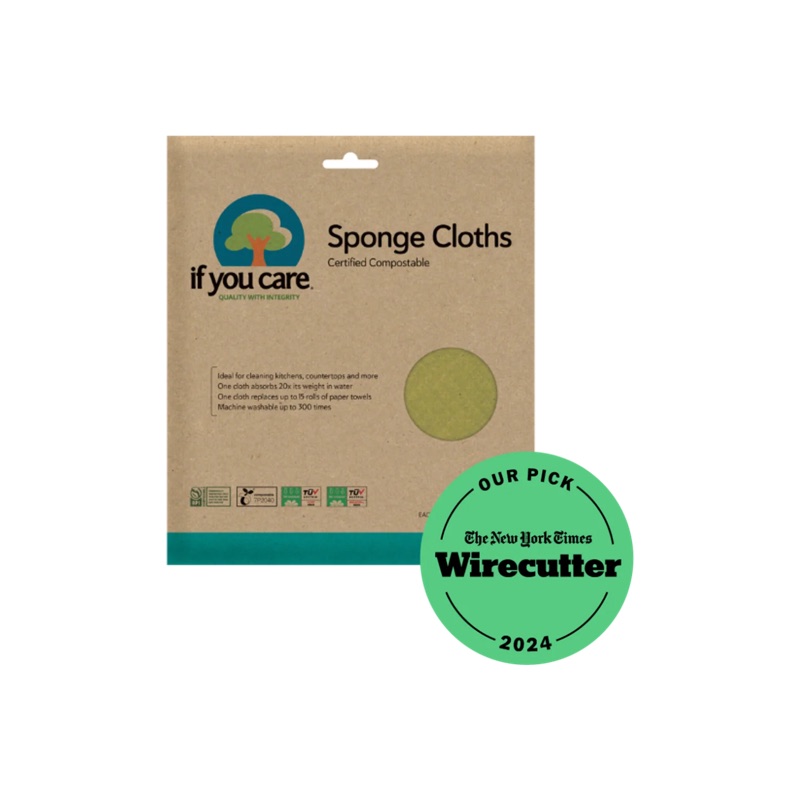 If You Care
 Sponge Cloths
Swedish-dishcloth-style cloths of 70% cellulose and 30% cotton, about $1.40 each, washable up to 300 times per the maker. BPI lists them as certified compostable. The colorant and the pack count are not stated. -
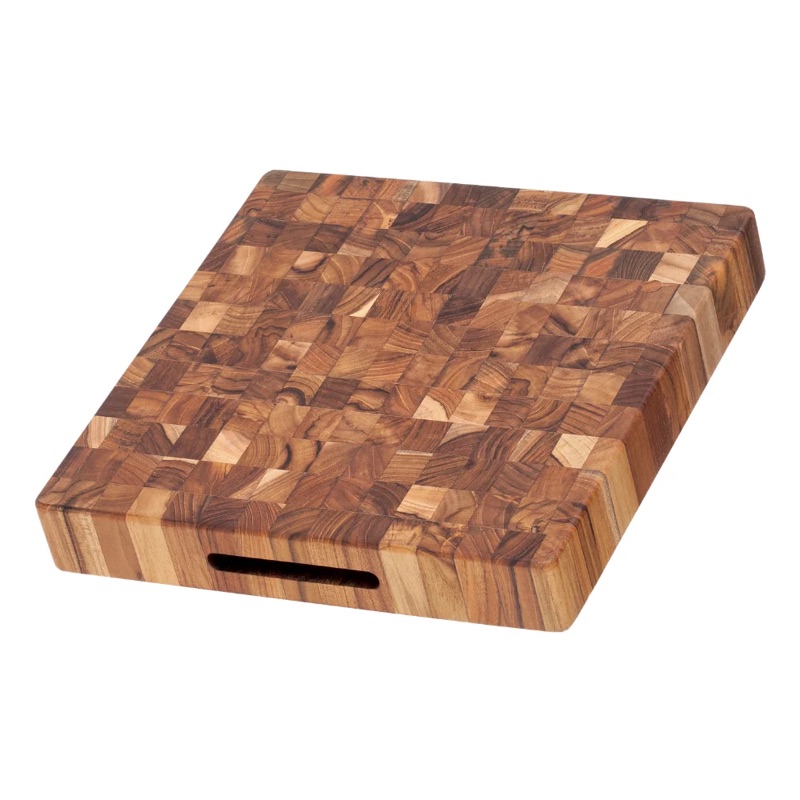 Teakhaus
 Butcher Block Cutting Board 317, 12 x 12 in
A thick end-grain teak board whose maker names its glue (KOYOBOND, water-based) and its finish (mineral oil and beeswax). Those, and the FSC wood claim, are the maker's statements; no lab report is published. -
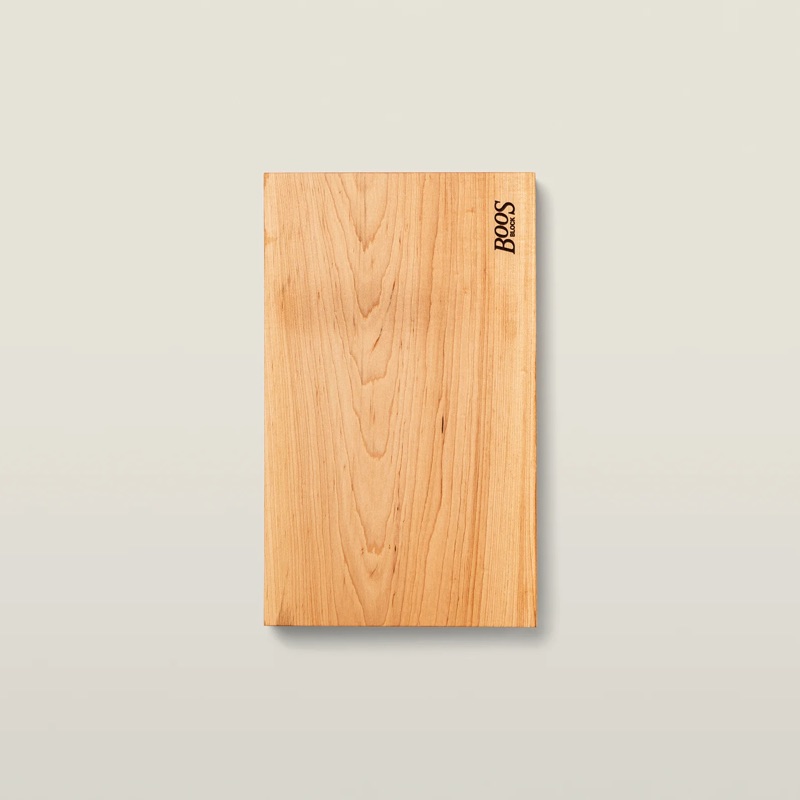 John Boos & Co.
John Boos Maple Rustic-Edge Design Cutting Board, 17 x 12 x 1-3/4 in (MPL-RST1712175)
A reversible board cut from one piece of maple: no glue joints, no coating, finished with a beeswax cream. A tester found no metals in a Boos maple board, though not this model. NSF reviews the factory. About $104. -
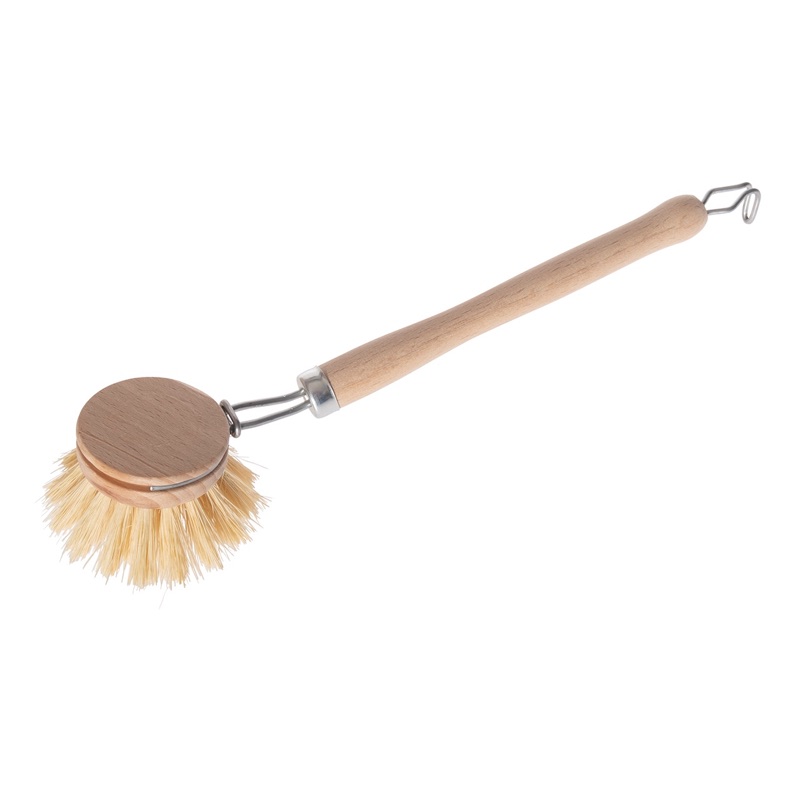 Iris Hantverk
 Dish Brush Everyday
A beech-wood dish brush with stiff tampico (agave) fiber and a replaceable head, so no plastic or wire bristles wear off. Materials and care come from the maker's pages; we found no independent test. -
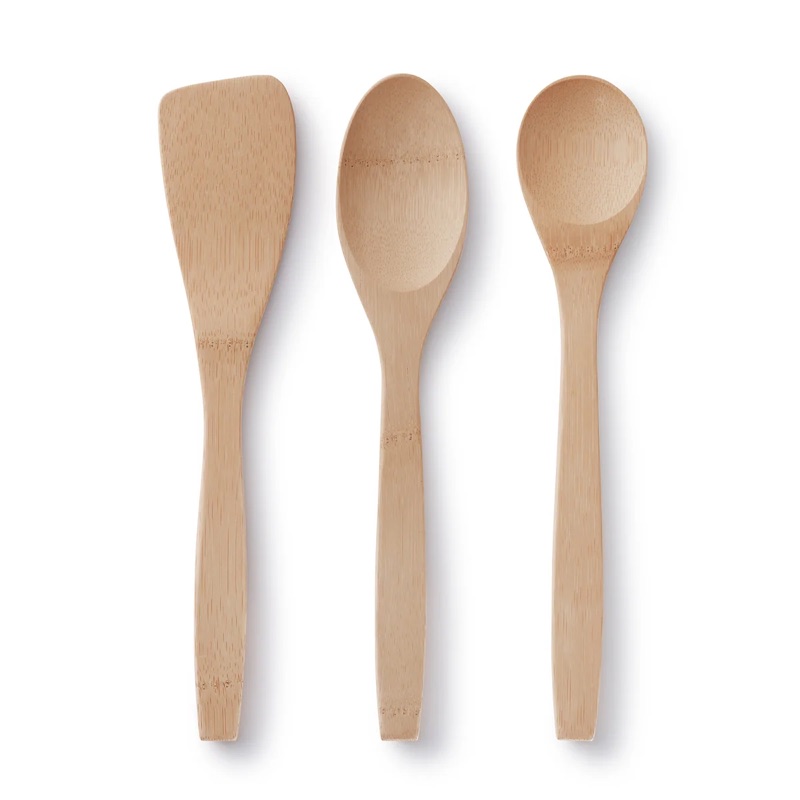 Bambu
Bambu Kitchen Basics Bamboo Cooking Utensils, set of 3
Three cooking utensils, each cut from a single piece of bamboo, so there is no glue to ask about. The finish is hand-burnished. The food-safety claims are the maker's; a 2017 metals screen of a related Bambu spoon was clean. -
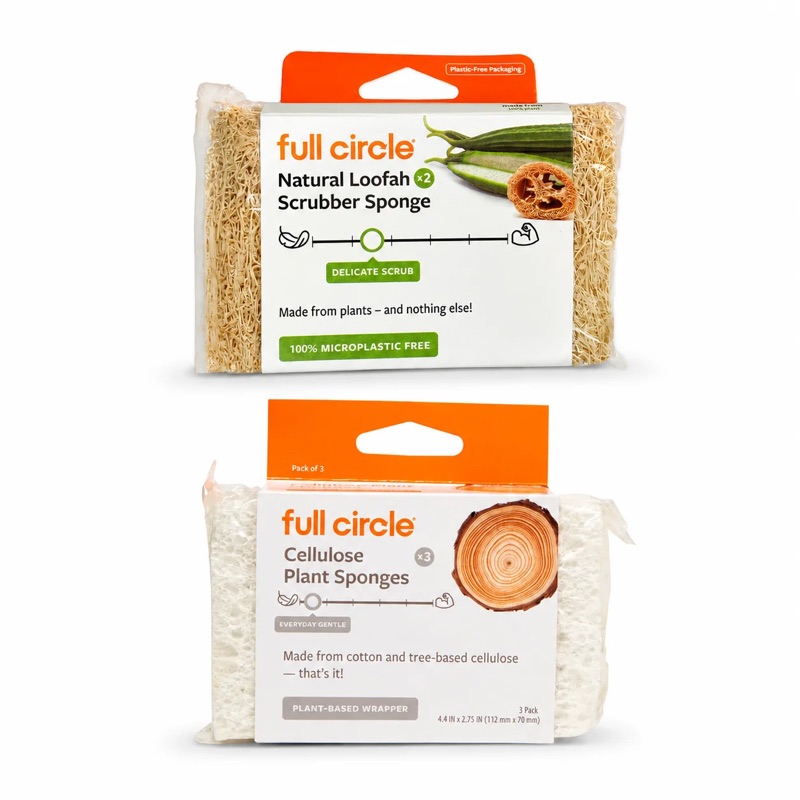 Full Circle
 Completely Plastic Free Sponge Set
Loofah scrubbers and cellulose sponges stitched with cotton, so nothing plastic wears off into the sink. The maker says no triclosan or dyes; we found no independent test, and other Full Circle scrubbers do contain plastic. -
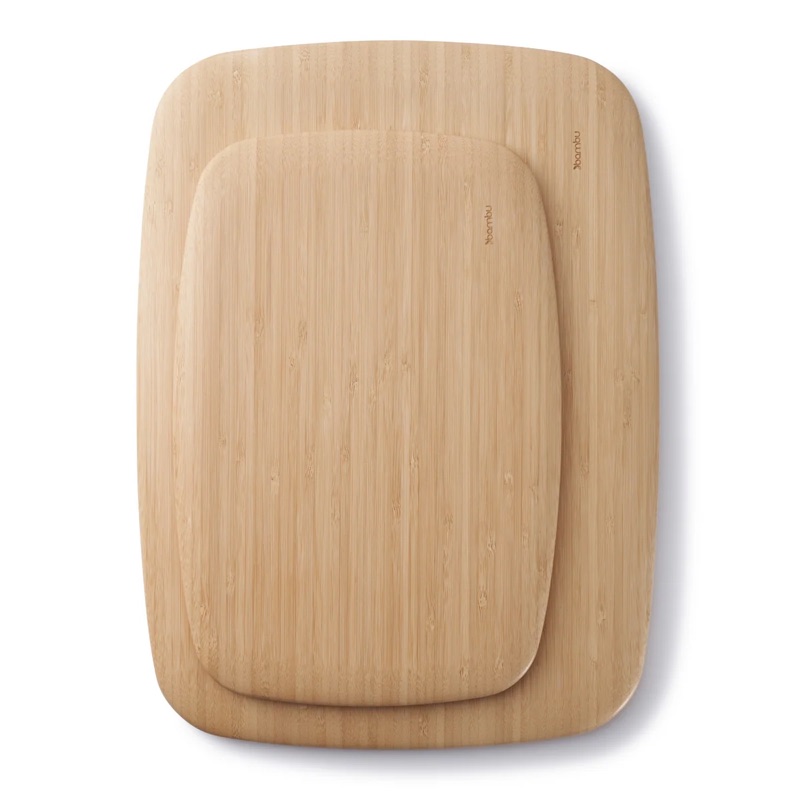 Bambu
Bambu Classic Bamboo Cutting & Serving Board
A reversible bamboo board whose maker says what holds it together (a water-based, formaldehyde-free adhesive) and how it is finished (food-safe wood oil) without naming either. No lab report is published. -
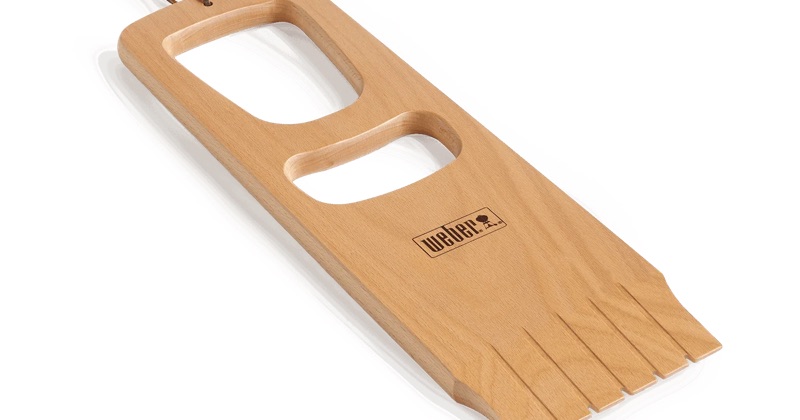 Weber
Weber Wood Grill Scraper
A hardwood grill scraper with notches that fit the grate, so there are no bristles, fibers or plastic to shed. Weber does not name the wood or any finish, and the claims are the maker's own.