Grain mills
Stone and burr mills for grinding your own whole-grain flour, with no plastic where the flour runs.
How we rank grain mills
- What touches the flour 40%
- Grinding 15%
- Durability 20%
- Trust 10%
- Value 15%
Why, and what each one means
We rank mills first by what touches the flour, because plastic and coatings can shed into food and a mill can be built without them (see reducing microplastic exposure). We found no study of microplastics from mill parts, or of grit or metal from stones and burrs, so each materials claim rests on the maker. We do not rank stone above steel: a 2024 study of 22 flours found the baker’s sourdough shaped bread quality (opens in a new tab) more than stone or roller milling did.
- What touches the flour 40%
- Named stones or steel burrs, with no plastic in the path the flour takes. Each plastic part the flour touches costs points.
- Grinding 15%
- Fine, adjustable flour from the grains you will use, by the maker’s published range and independent use.
- Durability 20%
- Built to last and to be repaired: a long warranty, parts sold separately and a maker that services what it sells.
- Trust 10%
- Highest when the maker names everything, answers questions, and has no recalls, warning letters, Prop 65 notices or lawsuits over safety or labeling. Points come off for unresolved problems and for paid promoters it does not disclose.
- Value 15%
- Price against mills of the same kind that pass.
Each product scores every one from 1 to 5, and its rating is the weighted average. We list only products rated 3 or above that break none of our rules.
We avoid
- High-speed impact (“micronizer”) mills with plastic milling chambers.
- “Stone” mills that do not say what the stones are made of.
- Claims that fresh flour loses its nutrients within hours, made with no source.
Read the research
Know one that fits? Suggest a product
4 products · best rated first
-
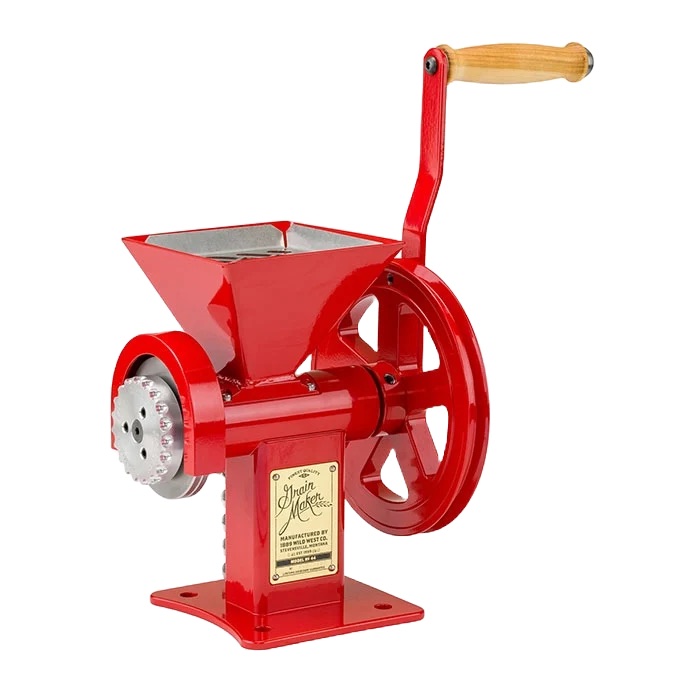 GrainMaker
 Model No. 44 Grain Mill
A US-made hand-crank mill with a steel hopper, hardened alloy-steel burrs, a stainless auger and an uncoated steel auger tube. No plastic named. $625. The finish inside the hopper and burr housing is not described. -
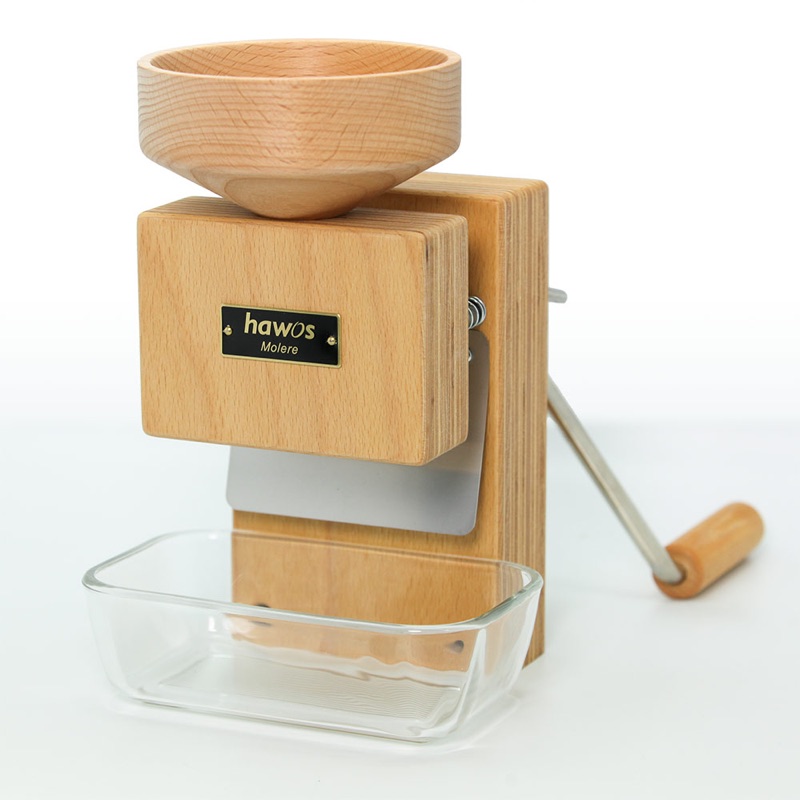 hawos
hawos Molere Hand Grain Mill
A beech-wood hand mill with a corundum/ceramic stone and a glass catch bowl in the box, so hawos names no plastic. It is slow, about 25 g of fine flour a minute, and the funnel and bearing lubricant are not described. -
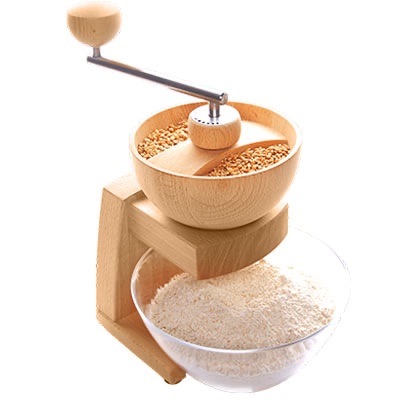 Kornkraft
 Mia Mola Hand Grain Mill
A solid-beech hand mill whose maker names the stones and their binder: Naxos basalt in magnesite and salt. About 50 g of fine flour a minute. The maker’s 10-year warranty is written for Germany and the EU. -
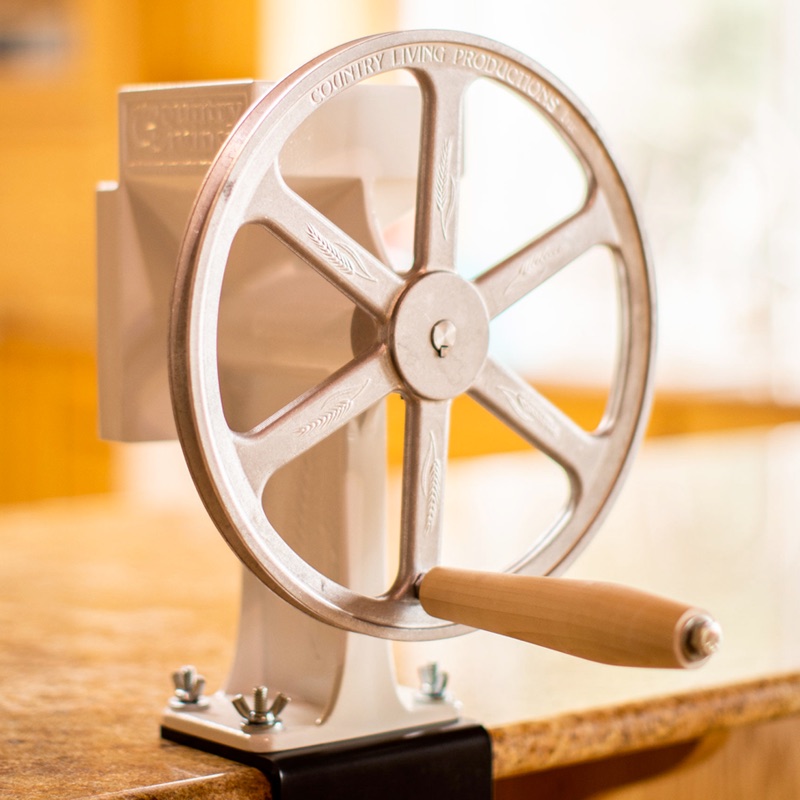 Country Living Products
Country Living Grain Mill
A US-made hand-crank mill with a cast aluminum frame, stainless shaft and auger, and steel plates: no stones, no plastic named. The powder-coat finish is not described. Lifetime warranty, but not on the plates or the finish.