Products · Clothing & underwear · Paka
Paka Essential Tee
Reader ratings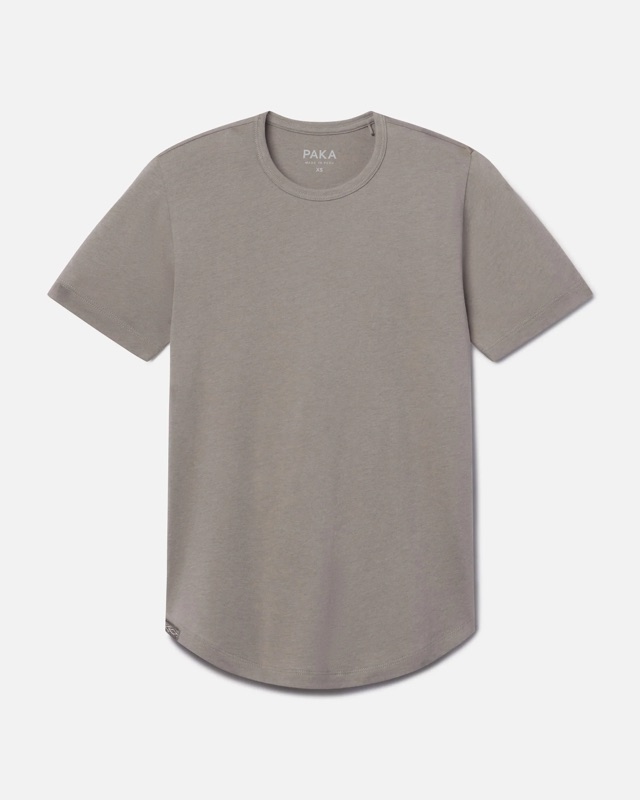
A tee of 85% organic Pima cotton and 15% alpaca, no spandex, made in Peru. The fibers are clear, but its organic and OEKO-TEX claims give no certificate numbers, no test is published, and it costs about three times Pact’s verified tee.
Best for Someone who wants a natural-fiber tee with no elastane or polyester and will pay more, knowing the certificates are the maker’s word.
- Our rating
- Fair (3.2 of 5)
- Price range
- Premium
- Verified marks
- Certified B Corporation: Paka (company, not product), per B Lab’s directory
- Size
- Women’s XS to XXL, eight colors; a men’s Essential Tee is sold too
- Made in
- Made in Peru
approx. $59 per tee
See it on Paka’s site → (opens in a new tab)We are not affiliated with Paka. This link goes to the maker’s own page, with no tracking code. How we're funded.
Also sold at Scheels ($59 for the women’s tee), Ramsey Outdoor ($55 for the men’s tee) .
Reader ratings & reviews
– out of 5
Loading ratings…
Rating breakdown
- 5 stars 0
- 4 stars 0
- 3 stars 0
- 2 stars 0
- 1 star 0
Have this product? Please rate it.
Check your email
We sent a sign-in link to . Click it and you’ll come straight back here, signed in. It expires in 15 minutes; check your spam folder if it doesn’t show up. Thank you for helping the community!
Your review
Reviews are personal experiences, not research, and they never change our quality ratings. Every review is read by our team before it appears.
How we evaluated it
How it scores Our rating, metric by metric
- Fabric & finishes 50% of the rating 4 of 5
Two natural fibers only, 85% organic Pima cotton and 15% alpaca, with no elastane or synthetics; the organic standard, dyes, thread and neckband are not named.
- Independent testing 20% of the rating 2 of 5
The OEKO-TEX and organic claims have no certificate number, Paka is not in the GOTS database and we found no published test of any kind.
- Trust 15% of the rating 3 of 5
No recalls, Prop 65 notices or suits found, and a B Corp listing (a company mark); points off for certificate claims with no numbers, an unsupported “naturally odor-resistant” claim and Trustpilot complaints about quality and service, two of them touching a tee.
- Value 15% of the rating 2 of 5
About $59, roughly three times the $20 Pact tee, which is 100% GOTS organic cotton.
The rating, 3.2 of 5, is the weighted average of these scores. See how we rank clothing & underwear and our standard.
Where to buy Stores and the prices we saw
- Scheels (opens in a new tab) approx. $59 for the women’s tee. A retail partner on Paka’s retailer page. The women’s Essential T-Shirt at the maker’s price, listed in Balsam, Woodrose, Black and Bone; on 2026-11-03 the page said only a few were left and showed some sizes missing. Ships to your home or can be picked up in a store.
- Ramsey Outdoor (opens in a new tab) approx. $55 for the men’s tee. A New Jersey outdoor shop that Paka lists as a retail partner. It sells only the men’s Essential Tee, in Black, not the women’s cut, at $4 less than the maker’s $59.
Prices as we saw them on October 23, 2026. They change often. These links carry no tracking code and earn us nothing.
What it’s made of What touches your food, water, skin or air
- 85% organic Pima cotton (organic standard not named)
- 15% Royal Alpaca fiber
- Dyes: Paka says its fiber is dyed with OEKO-TEX and GOTS certified dyes, or left in natural alpaca colors (not named for this tee)
- Thread, neckband and the handwoven “Inca ID” label: not stated
What people ask Worries raised online and elsewhere, and what we found
- Are the organic and OEKO-TEX claims real?
- We could not check them. Paka says its alpaca wool is OEKO-TEX certified (opens in a new tab) and its fiber is dyed with OEKO-TEX and GOTS certified dyes (opens in a new tab), with no certificate number, and the tee page does not name the standard behind “organic”. Paka does not appear in the GOTS database (searched 23 October 2026), and neither does Inca Tops, the processor named on the sample certificate Paka links; that certificate is a provenance record, not a chemical or organic certificate.
- Is alpaca shearing humane?
- A PETA undercover investigation at Mallkini, a large Peruvian alpaca farm owned by Michell Group, reported rough shearing, and in 2024 Peruvian police charged five shearers with cruelty to animals (opens in a new tab). Paka says it uses a shearing method (Inca Esquila) that cuts the time and stress, and small family herds. It names no farm for this tee: the sample certificate it links names a processor, Inca Tops, and a Puno farm, Rural Alianza E.P.S., for one lot, and the news report we read names neither, so we cannot tie this tee to Mallkini or clear it.
- Is “naturally odor-resistant” a treatment?
- Paka describes it as a property of alpaca and does not say any finish is added. We found no antimicrobial treatment mentioned and no data either way.
- What do customers say?
- Trustpilot (opens in a new tab) shows 32 reviews, most of them one star, about holes and pilling, shrinkage, a short return window and slow service. Almost all concern sweaters, hoodies, socks and pants. Two touch on a tee: a November 2025 review says a men’s T-shirt lost its shape at once, and an October 2025 review says Paka blocked the writer on Instagram after she asked about the alpaca content of the women’s T-shirts (she says a friend was later told 15%, which matches the product page). These are one-sided accounts, and Paka has not invited reviews there. Paka’s own page quotes happy buyers of the tee.
- Is it worth $59?
- The fiber list is good, but the price buys no published test or checkable certificate. Pact’s 100% GOTS organic cotton tee costs about $20, and Cottonique’s natural tee about $30.
- Do influencers earn from recommending it?
- We found no lab test, health-site endorsement or disclosed influencer deal for the tee. Paka does market through communities: in February 2022 an account speaking for Paka offered free socks and a 20% code in the r/GearTrade (opens in a new tab) and r/overlanding communities.
Why we chose it What put it on our list
- The page states the whole fabric: 85% organic Pima cotton and 15% Royal Alpaca fiber. No elastane, nylon or polyester is listed.
- Paka says the alpaca comes from small family herds in the Andes (60 to 90 animals each) and links a source certificate from its partner Pacomarca. The one it links is a sample: a Spanish-language traceability record from Inca Tops for one lot of Royal Alpaca processed in 2021, naming a Puno farm, Rural Alianza E.P.S. It is a provenance record, not an OEKO-TEX or organic certificate, and it is not for this tee.
- B Lab’s directory lists Paka as a Certified B Corporation since November 2020, with an overall score of 105.0 (read on 22 October 2026; B Lab’s site refused automated reads the next day). That is a company-level mark, not a textile test.
- Paka takes the tee back within 30 days.
Trade-offs What to weigh before you buy
- Paka says all its alpaca wool is OEKO-TEX certified and that its dyes are OEKO-TEX and GOTS certified. It gives no certificate number, Paka is not in the GOTS database, and it was not in OEKO-TEX’s opt-in Buying Guide when we looked on 22 October 2026. Those claims stay the maker’s.
- The page says “organic Pima cotton” without naming the organic standard or a certificate.
- It does not say what the dyes, thread or neckband are, or whether any finish is used. Paka calls alpaca “naturally odor-resistant”, which is a claim about the fiber that we did not verify.
- At about $59 it is roughly three times the price of a 100% GOTS organic cotton tee from Pact. Alpaca is an animal fiber, so it also raises welfare questions that cotton does not.
What to know Details worth knowing first
Paka is a Colorado company that makes alpaca clothing in Peru, and its Essential Tee is the piece in its range that best fits our checklist. The fabric is two natural fibers, 85% organic Pima cotton and 15% alpaca, with no spandex or synthetic blend. Our microplastics guide recommends natural fibers over synthetics where practical, because synthetic fabrics shed microfibers.
What we could not do is confirm the certificates. Paka says its alpaca wool and dyes are OEKO-TEX certified, but it gives no number to look up, it is not in the GOTS database, and the page does not name the standard behind “organic”. Our clothing chemicals guide notes that organic is a statement about the fiber, not the finish, so the certificate that covers finishing is the one that matters. No lab test of the tee is published.
That leaves a tee we rate near the bottom of this list, at three times the price of a tee whose certificate can be looked up: Pact’s Softspun Essential Crewneck Tee is 100% GOTS organic cotton at about $20. If you buy Paka’s, wash it before wearing and ask Paka which certificate covers the yarn and dyes.
What we checked Each claim, and how sure we are of it
- Tested by
- B Lab (company-level B Corp directory)
| What we checked | What we found |
|---|---|
| Certified textiles Maker’s claim | Paka says all its alpaca wool is OEKO-TEX certified, and that its fiber dyes are OEKO-TEX and GOTS certified, with no certificate numbers. Paka is not in the GOTS database and did not appear in OEKO-TEX’s Buying Guide company search (opt-in, so this does not show that no certificate exists). The page does not name the standard behind “organic Pima cotton”. |
| Natural fibers, synthetics stated Maker’s claim | 85% organic Pima cotton, 15% Royal Alpaca. No elastane, nylon or polyester. |
| No PFAS finishes Not verified | Not mentioned on the product page. |
| No antimicrobial finishes Not verified | Paka describes alpaca as naturally odor-resistant. It does not say whether any finish is added. |
| Dyes and trims named Maker’s claim | Not named for this tee. Paka’s origin page says the fiber is dyed with OEKO-TEX and GOTS certified dyes, or left in natural alpaca colors. |
| B Corp (company) Verified | B Lab’s directory lists Paka as a Certified B Corporation since November 2020, overall score 105.0, as read on 2026-10-22. |
What the labels mean
- Verified We opened an independent record that confirms it: a certifier’s listing, a regulator’s list or a lab report. It is linked under Sources.
- Maker’s claim The maker says so on its own page or label. We read it but found no independent record.
- Not verified We looked and could not confirm it, or the maker does not say. Treat it as unknown.
Sources Where our facts come from
- Paka Women’s Essential Tee product page. Maker’s page. Fiber percentages, colors, sizes, origin and the $59 price, read on 2026-10-23. Open ↗ (opens in a new tab)
- Paka: the origin of your alpaca (maker). Maker’s page. Dye claims and the Traceable Alpaca description. Open ↗ (opens in a new tab)
- Paka: environment page (maker). Maker’s page. The OEKO-TEX statement for alpaca wool and the shearing method. Open ↗ (opens in a new tab)
- Paka: Traceable Alpaca page (maker). Maker’s page. Describes the herds and the source certificate from Pacomarca. Open ↗ (opens in a new tab)
- B Lab directory: Paka. Certifier or regulator listing. Certified since November 2020; overall B Impact Score 105.0. Read in a browser on 2026-10-22; the site refused automated reads on 2026-10-23. Open ↗ (opens in a new tab)
- OEKO-TEX Buying Guide. Certifier or regulator listing. A company search for “Paka” on 2026-10-22 returned no match for Paka Apparel. The directory is opt-in, so this does not show that no certificate exists. Open ↗ (opens in a new tab)
- GOTS certified suppliers database. Certifier or regulator listing. A search for “Paka” on 2026-10-23 returned no supplier. Open ↗ (opens in a new tab)
- Paka sample source certificate (Inca Tops traceability record, lot Z40087). Independent source. Linked from Paka’s Traceable Alpaca page. A provenance record for one lot of 100% Royal Alpaca (producer Rural Alianza E.P.S., Puno; classified 2021). It is not a chemical or organic certificate and not for this tee. Open ↗ (opens in a new tab)
- Paka on Trustpilot. Independent source. 32 reviews read on 2026-10-23 across two pages; two touch on a T-shirt and the rest concern other garments. The profile is unclaimed and Paka has not invited reviews. Open ↗ (opens in a new tab)
- Reddit: r/GearTrade, Paka sock giveaway (February 2022). Independent source. A post by an account speaking for Paka, read through a Reddit archive on 2026-10-23. Open ↗ (opens in a new tab)
- FashionUnited: Peruvian alpaca wool shearers to go to court following PETA investigation (April 2024). Independent source. Reports the charges and PETA’s findings at Mallkini. We did not find the court outcome. Open ↗ (opens in a new tab)
Alternatives Other options to compare
- Pact Women’s Softspun Essential Crewneck Tee About $20. 100% GOTS-certified organic cotton, with a license you can look up.
- Cottonique Men’s T-Shirt (natural) (opens in a new tab) About $30. Undyed 100% organic cotton with cotton thread, from a GOTS-licensed maker.