Products · Essential oils · Plant Therapy
Plant Therapy Lavender Essential Oil
Reader ratings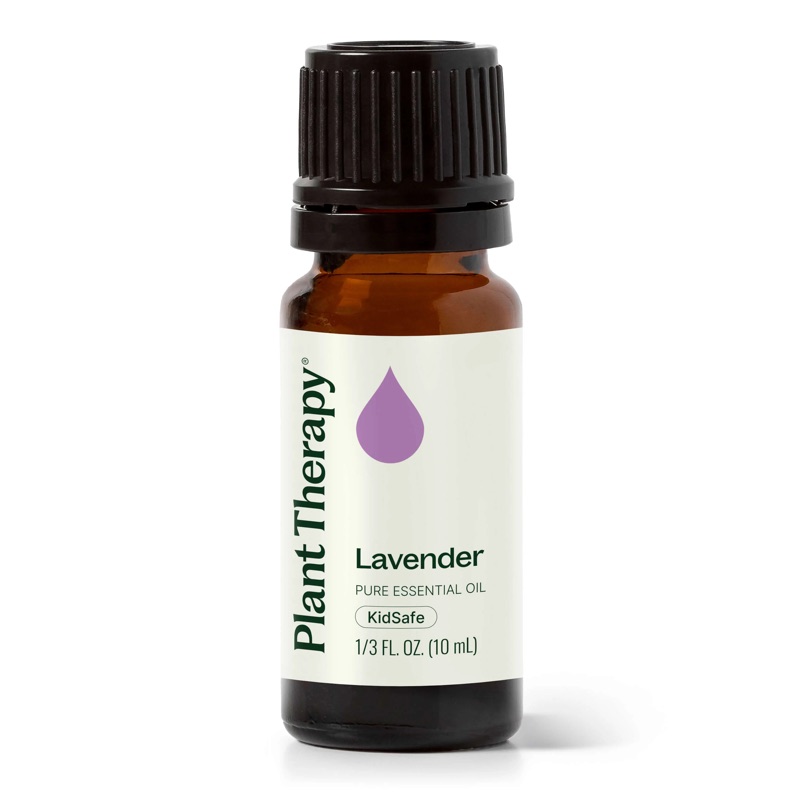
A single-ingredient lavender oil with three recent lot reports from an outside lab that the maker pays. Its organic sister oil had the lowest phthalates in an independent test of 22 oils; this one was not tested. Soft health claims.
Best for Anyone who wants an inexpensive lavender oil for a diffuser or for diluted skin use, with a lot report they can read.
- Our rating
- Good (3.6 of 5)
- Price range
- Budget
- Size
- 10 mL (30 mL is $17.99 and 100 mL is $39.99)
- Made in
- Lavandula angustifolia from Bulgaria, France, Greece or Spain, depending on the lot (maker’s statement)
approx. $9.99 for 10 mL
See it on Plant Therapy’s site → (opens in a new tab)We are not affiliated with Plant Therapy. This link goes to the maker’s own page, with no tracking code. How we're funded.
Also sold at Amazon ($9.99 for 10 mL), Walmart ($9.99 for 10 mL) .
Reader ratings & reviews
– out of 5
Loading ratings…
Rating breakdown
- 5 stars 0
- 4 stars 0
- 3 stars 0
- 2 stars 0
- 1 star 0
Have this product? Please rate it.
Check your email
We sent a sign-in link to . Click it and you’ll come straight back here, signed in. It expires in 15 minutes; check your spam folder if it doesn’t show up. Thank you for helping the community!
Your review
Reviews are personal experiences, not research, and they never change our quality ratings. Every review is read by our team before it appears.
How we evaluated it
How it scores Our rating, metric by metric
- Purity 35% of the rating 4 of 5
One ingredient, Lavandula angustifolia from the flowering tops, and three outside-lab lot reports found no adulterant by a screening method; they cover three lots, not every bottle.
- Batch testing 25% of the rating 4 of 5
Three lot reports from an ISO 17025 lab, published but paid for by Plant Therapy; nobody independent has tested this oil, though its organic sister oil had the lowest phthalates of 22 in a Mamavation test.
- Sourcing 15% of the rating 3 of 5
Bulgaria, France, Greece or Spain depending on the lot, and the reports name the country; not organic, and no distiller or farm is named.
- Trust 10% of the rating 3 of 5
No Prop 65 notice or lawsuit found and one 2020 CPSC recall of five wintergreen oils (not lavender) for non-child-resistant caps, with free replacement caps as the remedy; points off for soft health claims, “KidSafe”, “Pregnancy Safe” and “Pup & Pony Safe” badges it awards itself, and a “made without phthalates” line that no independent test checks for this oil.
- Value 15% of the rating 3 of 5
$9.99 for 10 mL is about $1.00 a mL; the 30 mL bottle is about $0.60 a mL and the 100 mL bottle about $0.40.
The rating, 3.6 of 5, is the weighted average of these scores. See how we rank essential oils and our standard.
Where to buy Stores and the prices we saw
- Amazon (opens in a new tab) approx. $9.99 for 10 mL. Sold by Plant Therapy’s own Amazon store (“Plant Therapy Essential Oils”) and shipped by Amazon; the title says 10 mL (1/3 oz), 100% pure and undiluted.
- Walmart (opens in a new tab) approx. $9.99 for 10 mL. Sold by Plant Therapy and fulfilled by Walmart. The 10 mL bottle, with the same UPC as the 10 mL on Plant Therapy’s own page. Opened 2026-11-03.
Prices as we saw them on October 23, 2026. They change often. These links carry no tracking code and earn us nothing.
What’s in it Every ingredient, in label order
- Lavandula Angustifolia (Lavender) Oil
Who tested it What each test found, and who paid for it
- Maker’s own test Laboratoire PhytoChemia (Saguenay, Quebec), paid by Plant Therapy July 24, 2025
Certificate of analysis for lot L40122R (Bulgaria): gas chromatography and refractive index (1.4612). Linalool 31.4%, linalyl acetate 30.5%, 1,8-cineole and camphor low. “No adulterant, contaminant or diluent has been detected using this method.” The report shows an ISO 17025 certified method. Open ↗ (opens in a new tab)
- Maker’s own test Laboratoire PhytoChemia (Saguenay, Quebec), paid by Plant Therapy November 12, 2025
Certificate of analysis for lot L40123R (Bulgaria): linalool 33.2%, linalyl acetate 27.7%, refractive index 1.4631, same conclusion. First issued 2025-10-28 and reissued to correct the sample identification. Open ↗ (opens in a new tab)
- Maker’s own test Laboratoire PhytoChemia (Saguenay, Quebec), paid by Plant Therapy February 6, 2026
Certificate of analysis for lot L40124R (Greece): linalool 33.6%, linalyl acetate 27.3%, refractive index 1.4618, same conclusion. First issued 2025-10-30 and reissued to correct the sample identification. Open ↗ (opens in a new tab)
- Independent Mamavation with Environmental Health News (Mamavation earns affiliate income) February 2025
Sent 22 lavender and peppermint oils from 11 brands to an EPA-certified lab (not named) and tested them for 15 phthalates. All 22 had traces, from 40 to 13,029 ppb in total. Plant Therapy’s Organic Lavender, a sister product to this oil, had 40 ppb, the lowest of the 22. This non-organic oil was not tested. Bottles were bought from November 2023 to December 2024. Open ↗ (opens in a new tab)
Who paid, and why it matters
- Independent The tester took no money from the maker for it: a consumer group, a journalist, a university or a regulator.
- Paid certification An outside lab or certifier tested or listed it, and the maker paid for that.
- Maker’s own test A lab report or certificate of analysis the maker commissioned and published.
A certification is a floor, not a verdict: it checks what its program checks and nothing else. We weigh tests by someone with no stake in the result most.
What people ask Worries raised online and elsewhere, and what we found
- Is it really pure lavender?
- Three reports from an ISO 17025 lab show a true lavender profile and no adulterant by its method. A gas chromatography profile is a screen, not proof: a 2021 University of Mississippi study (opens in a new tab) of 72 lavender oils found standard methods are not enough to catch adulteration with synthetic compounds and built a stricter test. The reports cover three lots, so match the lot number on your bottle.
- Does it contain phthalates? The page says “made without phthalates”.
- Mamavation’s lab found traces of phthalates in all 22 lavender and peppermint oils it tested, including 40 ppb in Plant Therapy’s Organic Lavender, the lowest of the group. This non-organic oil was not tested, so “without” can only mean none were added. We found no limit for phthalates in essential oils.
- Is it safe on skin, for children, in pregnancy or around pets?
- The “KidSafe”, “Pregnancy Safe”, “Nursing Safe” and “Pup & Pony Safe” badges are the company’s own, not an outside standard, and the page says its KidSafe products are not endorsed by the Child Accident Prevention Foundation of Australia. Lavender oil can sensitize skin once it oxidizes: 2.8% of dermatitis patients (opens in a new tab) reacted to oxidized lavender oil in one patch-test study. Dilute it, and see our safety guide. Ask a vet before using it around pets.
- Does Plant Therapy gift or pay influencers?
- Probably. Its store data tags this oil “Gifted Collabs” and its organic sibling “Influencer Product Seeding”, which suggests it sends free product to creators. We found no public list of partners or terms, so we cannot say who, or how they disclose it.
- Any recalls, Prop 65 notices or lawsuits?
- One recall, and not of this oil. In March 2020 CPSC announced a recall (opens in a new tab) of about 34,000 bottles of its wintergreen oils and blends (sold before September 2019) because the caps were not child-resistant; they contain methyl salicylate. No injuries were reported and the remedy was a free child-resistant cap. Lavender was not in it. California’s Prop 65 notice list and FDA’s recall database held nothing under its name on 2026-10-23. We could not search court dockets or FDA’s warning letters.
Why we chose it What put it on our list
- Reports are posted for three lots: L40122R (Bulgaria, July 2025), L40123R (Bulgaria, November 2025) and L40124R (Greece, February 2026). We opened all three. Each is a signed certificate of analysis from Laboratoire PhytoChemia in Quebec.
- Each reads as lavender, with linalool at 31.4 to 33.6% and linalyl acetate at 27.3 to 30.5%, and each concludes that no adulterant, contaminant or diluent was detected by the lab’s method.
- The page names the plant (Lavandula angustifolia), the part (flowering tops), the method (steam distilled) and the possible countries (Bulgaria, France, Greece, Spain).
- At $9.99 for 10 mL (about $1.00 a mL) it is the least expensive bottle we list, and the larger bottles cost less per milliliter.
Trade-offs What to weigh before you buy
- The reports cover three lots, and the newest is dated February 2026. We could not check which lot is in the bottle you receive, so match the lot number on your bottle to the report list, and ask Plant Therapy if it is missing.
- The shop copy makes soft health claims: “a laundry list of therapeutic benefits”, “alleviating anxiety”, “supports mental health” and a place in a “natural healing kit for minor cuts and scrapes”. Our lavender article finds that the anxiety trials used a standardized oral capsule, not a diffuser oil, and that no human trial has tested lavender oil on wounds.
- The page suggests diluting to 2 to 5% for skin. Our safety guide gives 2 to 3% for adults and 1% for the face and for children aged 6 to 12.
- The page does not say what the bottle is made of or whether it has a dropper or a child-resistant cap.
What to know Details worth knowing first
Lavender is one of the most popular essential oils and one of the easier ones to check, because its chemistry is well known: mostly linalool and linalyl acetate. Plant Therapy posts a gas chromatography report for the lots it sells, written by an outside lab, which it pays. We opened all three. Each profile is what true Lavandula angustifolia should look like, and the lab found no adulterant, contaminant or diluent by its method. A gas chromatography profile is a screen, not proof of every kind of adulteration.
A report is only useful if it matches your bottle. Look for the lot number on the label and compare it with the list on the product page. We checked the three posted reports, not the bottle you will receive. The only independent contaminant test we found covered the company’s organic lavender, not this oil; it had the lowest phthalate result of 22 oils.
The shop copy promises more than the evidence does. Our lavender article separates what the trials tested from marketing, and our safety guide covers dilution, pets and children. Do not swallow bottled essential oils.
What we checked Each claim, and how sure we are of it
- Tested by
- Laboratoire PhytoChemia, paid by Plant Therapy (lots L40122R, L40123R, L40124R)
- Certificate of analysis
- Yes
| What we checked | What we found |
|---|---|
| A batch test Verified | Reports for lots L40122R, L40123R and L40124R are linked from the product page, and we opened all three: certificates of analysis (GC profiling and refractive index) from Laboratoire PhytoChemia, dated 2025-07-24, 2025-11-12 and 2026-02-06. Each concludes that no adulterant, contaminant or diluent was detected by its method. The lab is paid by Plant Therapy. PhytoChemia’s reports show an ISO 17025 certified method; we did not check that with an accreditor. |
| Named plants Maker’s claim | Latin name Lavandula angustifolia; flowering tops; steam distilled; Bulgaria, France, Greece or Spain. The three reports are labeled Bulgaria, Bulgaria and Greece. |
| Honest claims Maker’s claim | No promise to cure a disease and no advice to swallow the oil; the page says the International Federation of Aromatherapists does not recommend taking oils by mouth. It does make soft claims such as “alleviating anxiety”, “supports mental health” and healing minor cuts. |
| Safety information Maker’s claim | Cautions: keep out of reach of children, ask a physician if pregnant or under a doctor’s care, external use only. Dilution advice is 2 to 5% for skin. No cat warning. |
| Dark glass, dropper and lot number Not verified | Not stated on the product page. Lot numbers appear in the report list. |
| Independent contaminant test Not verified | None for this oil. Mamavation’s phthalate test covered the organic sister product (40 ppb, the lowest of 22 oils). |
| Recalls and Prop 65 notices Verified | CPSC lists one recall, March 2020, of five wintergreen products for caps that were not child-resistant; lavender was not included. No Prop 65 notice and no FDA recall found, searched 2026-10-23. Court dockets and FDA warning letters were not searched. |
What the labels mean
- Verified We opened an independent record that confirms it: a certifier’s listing, a regulator’s list or a lab report. It is linked under Sources.
- Maker’s claim The maker says so on its own page or label. We read it but found no independent record.
- Not verified We looked and could not confirm it, or the maker does not say. Treat it as unknown.
Sources Where our facts come from
- Plant Therapy Lavender Essential Oil product page. Maker’s page. Prices, claims, cautions, “made without” list and the list of lot reports as seen on 2026-10-23. Open ↗ (opens in a new tab)
- Certificate of analysis for lavender lot L40122R, Laboratoire PhytoChemia, 2025-07-24. Test report. Hosted by Plant Therapy. Linalool 31.4%, linalyl acetate 30.5%. Covers this lot only. Open ↗ (opens in a new tab)
- Certificate of analysis for lavender lot L40123R, Laboratoire PhytoChemia, 2025-11-12. Test report. Same conclusion. Linalool 33.2%, linalyl acetate 27.7%. Reissued to correct the sample identification. Open ↗ (opens in a new tab)
- Certificate of analysis for lavender lot L40124R, Laboratoire PhytoChemia, 2026-02-06. Test report. Same conclusion; labeled Greece. Linalool 33.6%, linalyl acetate 27.3%. Reissued to correct the sample identification. Open ↗ (opens in a new tab)
- Laboratoire PhytoChemia. Independent source. The lab’s own site, which describes it as ISO 17025 accredited. Open ↗ (opens in a new tab)
- Mamavation: essential oils tested for toxic phthalates. Test report. February 2025. 22 lavender and peppermint oils, 11 brands; Plant Therapy Organic Lavender KidSafe 40 ppb total phthalates. Full raw data is behind a free account. Open ↗ (opens in a new tab)
- Wang et al., 2021, Journal of Pharmaceutical and Biomedical Analysis: A novel approach for lavender essential oil authentication and quality assessment. Independent source. University of Mississippi and USDA. 72 lavender oils; says existing standards and methods are not enough to catch adulteration. Open ↗ (opens in a new tab)
- Hagvall and Christensson, 2016, Acta Dermato-Venereologica: Patch testing with main sensitizers does not detect all cases of contact allergy to oxidized lavender oil. Independent source. Positive reactions to oxidized lavender oil in 2.8% of consecutively patch-tested patients. Open ↗ (opens in a new tab)
- Tisserand Institute: essential oil safety guidelines. Independent source. Advises against undiluted skin use and against swallowing oils unless a qualified practitioner advises it. Open ↗ (opens in a new tab)
- California Attorney General: Prop 65 60-day notice search for “Plant Therapy”. Certifier or regulator listing. No notice names the company. Searched 2026-10-23. Open ↗ (opens in a new tab)
- CPSC recall 20-723: Plant Therapy wintergreen essential oils and blends, March 19, 2020. Certifier or regulator listing. About 34,000 bottles of five wintergreen products that contain methyl salicylate; caps not child-resistant; no injuries reported; free replacement cap. Lavender was not recalled. Open ↗ (opens in a new tab)
Alternatives Other options to compare
- Plant Therapy Organic Lavender Essential Oil The same maker’s USDA organic version, at about $11.99 for 10 mL. It is the oil Mamavation tested for phthalates, and had the lowest result of 22.
- Mountain Rose Herbs Organic Lavender Essential Oil USDA organic handler and the plainest label copy, but no published lot report; about $16.25 for 1/2 oz.