Products · Tea & teaware · The Tao of Tea
The Tao of Tea Organic Genmaicha (Brown Rice Tea)
Reader ratings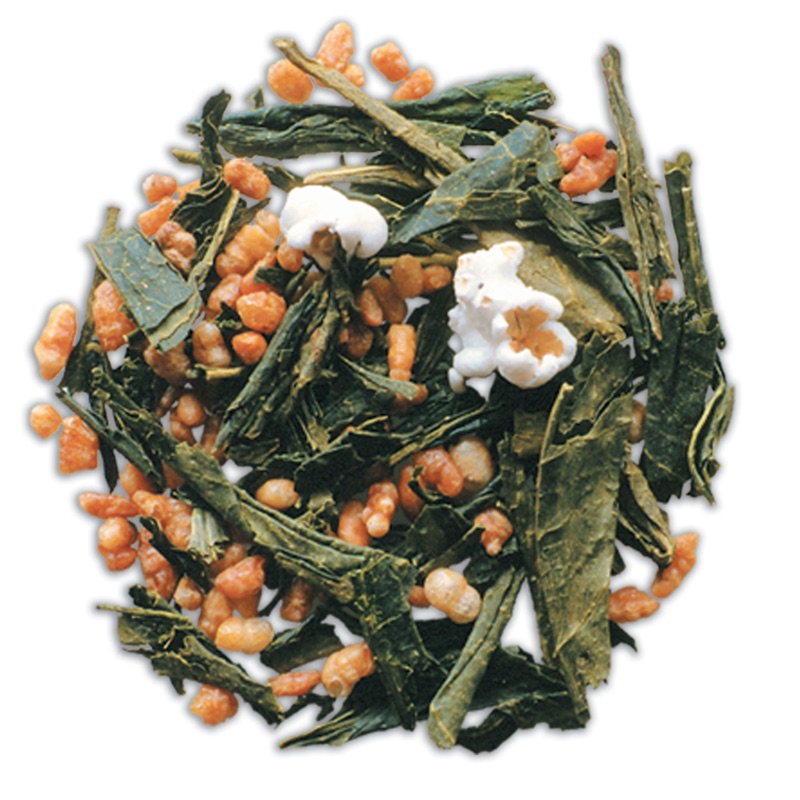
Everyday loose-leaf genmaicha (sencha with toasted rice) from a Portland tea house. USDA lists it as organic, and an outside lab found no lead in a strong brew, at a coarse 5 ppb limit. A 2016 Prop 65 notice named it over lead.
Best for Anyone who wants an inexpensive everyday loose-leaf green tea with an organic listing and a lab result on the brewed cup.
- Our rating
- Good (3.6 of 5)
- Price range
- Budget
- Verified marks
- USDA Organic (QAI)
- Size
- 3.5 oz (Classic) tin or 2 oz (Small Wonder) tin
- Made in
- Japan; the shop lists it under Japan and tags it Shizuoka, and Vitacost’s copy says “Shizuoka, Japan”; no farm is named
approx. $12 for a 3.5 oz tin ($7 for 2 oz)
See it on The Tao of Tea’s site → (opens in a new tab)We are not affiliated with The Tao of Tea. This link goes to the maker’s own page, with no tracking code. How we're funded.
Also sold at Amazon ($12 for the 3.5 oz tin), Vitacost ($12 for the 3.5 oz (100 g) tin) .
Reader ratings & reviews
– out of 5
Loading ratings…
Rating breakdown
- 5 stars 0
- 4 stars 0
- 3 stars 0
- 2 stars 0
- 1 star 0
Have this product? Please rate it.
Check your email
We sent a sign-in link to . Click it and you’ll come straight back here, signed in. It expires in 15 minutes; check your spam folder if it doesn’t show up. Thank you for helping the community!
Your review
Reviews are personal experiences, not research, and they never change our quality ratings. Every review is read by our team before it appears.
How we evaluated it
How it scores Our rating, metric by metric
- Leaves & farming 25% of the rating 3 of 5
USDA’s listing names Tea, GenmaiCha. The page says Japan and links a Shizuoka regions page, but names no farm, grower or harvest, and its tags list both China and Japan.
- Independent testing 30% of the rating 3 of 5
One independent test of the brewed tea (SGS via SimpleLab, December 2024): no lead, cadmium, arsenic or mercury at a 5 ppb limit. That limit is too coarse to rule out low levels, the dry leaf and pesticides were not tested, and the maker publishes nothing.
- What touches the tea 15% of the rating 4 of 5
Loose leaf in a tin, so no tea bag. The packaging details are the maker’s.
- Trust 10% of the rating 3 of 5
Two 2016 Prop 65 notices over its dried teas: one (naphthalene) settled in January 2017 for $30,000 with reformulation, the other (lead and naphthalene) with no outcome posted. No recalls found, and no safety wording on its page.
- Value 20% of the rating 5 of 5
About $0.12 a gram ($12 for 99 g), the cheapest tea here. Part of the weight is rice, so a cup costs more than the per-gram figure suggests.
The rating, 3.6 of 5, is the weighted average of these scores. See how we rank tea & teaware and our standard.
Where to buy Stores and the prices we saw
- Amazon (opens in a new tab) approx. $12 for the 3.5 oz tin. Sold and shipped by Amazon.com, not by The Tao of Tea. The listing’s ingredients match: organic green tea leaves and organic toasted brown rice.
- Vitacost (opens in a new tab) approx. $12 for the 3.5 oz (100 g) tin. Sold by Vitacost, with the same barcode as the Amazon tin. The page says “Certified Organic by QAI” and “Origin, Shizuoka, Japan”, and shows a best-by date of 31 December 2028.
Prices as we saw them on October 23, 2026. They change often. These links carry no tracking code and earn us nothing.
What’s in it Every ingredient, in label order
- Organic green tea leaves
- Organic toasted brown rice
Who tested it What each test found, and who paid for it
- Paid certification USDA National Organic Program, through QAI (a certifier The Tao of Tea pays) October 2026
Lists The Tao of Tea as an organic operation, with “Tea, GenmaiCha” among its products. Organic rules cover farming inputs and handling, not lead or other metals, and set no fluoride limit. Open ↗ (opens in a new tab)
- Independent SGS North America (Harrisburg, Pennsylvania) via SimpleLab, paid for by Lead Safe Mama’s owner; Lead Safe Mama earns affiliate income December 2024
The tea brewed strong in lead-free equipment (about five minutes, then overnight), tested as a liquid (report HRFKBS): arsenic, cadmium, lead and mercury all not detected at 5 µg/kg. The dry leaf was not tested and there was no pesticide test. Open ↗ (opens in a new tab)
Who paid, and why it matters
- Independent The tester took no money from the maker for it: a consumer group, a journalist, a university or a regulator.
- Paid certification An outside lab or certifier tested or listed it, and the maker paid for that.
- Maker’s own test A lab report or certificate of analysis the maker commissioned and published.
A certification is a floor, not a verdict: it checks what its program checks and nothing else. We weigh tests by someone with no stake in the result most.
What people ask Worries raised online and elsewhere, and what we found
- Have lead notices named The Tao of Tea?
- Yes. Two California Prop 65 notices filed in 2016 named The Tao of Tea LLC over its dried teas, loose leaf and bagged. One, 2016-00781 (opens in a new tab), alleged naphthalene and ended in a January 2017 settlement of $30,000 ($4,000 penalty) with reformulation as the relief. The other, 2016-00884 (opens in a new tab), alleged lead and naphthalene and lists no outcome. Notices are allegations, and these are about ten years old.
- Does “not detected” mean it has no lead?
- No. The lab could only see down to 5 ppb in the liquid. A cup (250 mL) at 5 ppb would hold about 1.25 µg, more than California’s 0.5 µg a day level, so the result rules out high lead but not low levels. For context, Consumer Reports found concerning lead after brewing in only two of 30 teas in 2024 (report (opens in a new tab)); The Tao of Tea was not among them. The dry leaf was not tested; the Lead Safe Mama post (opens in a new tab) says a fundraiser for that had not been funded. See our lead guide.
- Where does it come from?
- The product page (opens in a new tab) says Japan and links a page on the Shizuoka tea regions, but its tags list both China and Japan, and it names no farm or harvest year. Vitacost’s page for the same tin says “Origin, Shizuoka, Japan”, which is the brand’s own copy. We could not confirm the origin of the tea or the rice.
- What about fluoride and pesticides?
- Neither was measured, and the maker publishes nothing. Tea plants take up fluoride, and levels rise with leaf age (Lu et al. 2004 (opens in a new tab)). USDA organic status speaks to pesticides, not fluoride.
Why we chose it What put it on our list
- The Tao of Tea is in the USDA Organic Integrity Database (certifier QAI, status effective 26 Jan 2006), and “Tea, GenmaiCha” is on its certified product list.
- An outside lab found no lead in the brewed tea. In Dec 2024 Lead Safe Mama, an advocacy group, steeped this tea strong and sent the liquid to SGS North America. Lead, cadmium, arsenic and mercury were all not detected at 5 ppb.
- It is loose leaf in a tin, and the page lists two ingredients: organic green tea leaves and organic toasted brown rice.
- At $12 for 3.5 oz (about 99 g) it costs about $0.12 a gram. Part of that weight is rice, so the cost per cup is higher than the per-gram figure suggests.
Trade-offs What to weigh before you buy
- The outside test was of the brewed liquid, not the dry leaf, and covers one sample. A result below 5 ppb tells you about that cup, and only down to that limit. No pesticide test was run.
- Two Prop 65 notices in 2016 named The Tao of Tea over its dried teas (naphthalene in one, lead and naphthalene in the other); one settled in 2017 with reformulation. The Tao of Tea publishes no test results of its own, so the only lab data are the advocacy group’s single test.
- The page gives no harvest year or packing date and does not name a farm.
- Genmaicha is part rice, so you get less tea per gram than from plain sencha. The shop suggests 160 to 170 °F water and 2 to 3 minutes.
What to know Details worth knowing first
Genmaicha is steamed green tea blended with toasted brown rice, a mild, nutty cup that is easy to like. The Tao of Tea is a Portland, Oregon tea house, and this is its loose-leaf version in a tin. Loose leaf also avoids the plastic that some tea bags shed, which we cover in loose leaf vs. tea bags.
It is listed because two things check out. The USDA database confirms the organic certification, and an outside lab found nothing detectable in a strong brew. It is also the cheapest tea here per gram. Two things count against it: California Prop 65 notices in 2016 named the company over its dried teas, one of them for lead (the lead notice shows no outcome; another settled in 2017 with reformulation), and it publishes nothing itself.
Read the lab result for what it is. It does not say the dry leaf is lead-free, and tea leaves can take up lead from soil (see our matcha guide). It says that one very strong cup had none above 5 ppb, a limit coarse enough that a cup at that level would still hold more than California’s daily lead level. We would like a test of the dry leaf, and a harvest date on the tin.
What we checked Each claim, and how sure we are of it
| What we checked | What we found |
|---|---|
| Tested for lead and pesticides Verified | Brewed tea tested at SGS North America (report HRFKBS, reported 11 Dec 2024): arsenic, cadmium, lead and mercury not detected at 5 ppb. The test covered the liquid, not the dry leaf, and no pesticide test was run. |
| Organic Verified | The Tao of Tea is certified by QAI (NOP ID 5520029967) under the USDA National Organic Program (status effective 26 Jan 2006), and the listing names “Tea, GenmaiCha”. |
| Named origin Maker’s claim | Japan. The shop lists it under Japan and links a page on the Shizuoka tea regions; its tags list both China and Japan. No farm is named. |
| Loose leaf or plastic-free bags Maker’s claim | Loose leaf, sold in a tin. No tea bag is involved. |
| Freshness Not verified | No harvest year or packing date on the page. The tin blocks light. |
| Notices and recalls Verified | Two 2016 Prop 65 notices named The Tao of Tea LLC over dried teas: 2016-00781 (naphthalene; settled January 2017 for $30,000 with reformulation) and 2016-00884 (lead and naphthalene; no outcome posted). We found no FDA enforcement report naming it. |
What the labels mean
- Verified We opened an independent record that confirms it: a certifier’s listing, a regulator’s list or a lab report. It is linked under Sources.
- Maker’s claim The maker says so on its own page or label. We read it but found no independent record.
- Not verified We looked and could not confirm it, or the maker does not say. Treat it as unknown.
Sources Where our facts come from
- The Tao of Tea: Brown Rice Tea, Genmaicha (product page). Maker’s page. Seen 23 October 2026: $7 to $12; ingredients line; brewing chart (2 tsp per 8 oz); tags. Open ↗ (opens in a new tab)
- The Tao of Tea: our values. Maker’s page. Says its teas have no artificial flavors, additives or preservatives. States no testing. Open ↗ (opens in a new tab)
- USDA Organic Integrity Database: The Tao of Tea. Certifier or regulator listing. Checked 22 October 2026 (not re-opened on 23 October). Open ↗ (opens in a new tab)
- Lead Safe Mama: Organic Genmaicha, The Tao of Tea, 2024 lab report. Test report. Opened 23 October 2026, with the lab report image. Paid for personally by the site’s owner; SGS North America via SimpleLab, brewed tea, collected 30 Nov 2024, reported 11 Dec 2024. Lead Safe Mama earns affiliate income. Open ↗ (opens in a new tab)
- California Attorney General: Prop 65 notice 2016-00781 (settlement 19 January 2017). Certifier or regulator listing. Leeman v. The Tao of Tea LLC: naphthalene in dried teas (loose leaf and bagged); $4,000 civil penalty, $26,000 fees; relief: reformulation. Open ↗ (opens in a new tab)
- California Attorney General: Prop 65 notice 2016-00884. Certifier or regulator listing. Filed 19 August 2016: lead and naphthalene in dried teas (loose leaf and bagged); names The Tao of Tea LLC and Piedmont Grocery Company. No settlement posted. Open ↗ (opens in a new tab)
- Consumer Reports: Good news on tea, few contaminants, lots of health benefits (20 May 2024). Test report. Opened 23 Oct 2026 and again in the second pass. Independent tests of 30 teas; lead was concerning after brewing in only two (Luzianne Iced Black Tea and From Great Origins Organic Hibiscus). The article names brands such as Bigelow, Lipton, Twinings and Yamamotoyama, not The Tao of Tea, but it does not print the full list of 30. Open ↗ (opens in a new tab)
- Fluoride content in tea and its relationship with tea quality (Lu et al., 2004). Independent source. PMID 15237954. Opened and checked. Open ↗ (opens in a new tab)
- openFDA: food enforcement reports (recalling firm search). Certifier or regulator listing. Searched 23 Oct 2026: no matches. Open ↗ (opens in a new tab)
- Amazon and Vitacost listings: The Tao of Tea Genmaicha, 3.5 oz tin. Independent source. Opened 23 October 2026. Amazon $12.00, sold and shipped by Amazon.com, UPC 689951310507, ingredients “Organic Green Tea Leaves and Organic Toasted Brown Rice”. Vitacost $12.00, same UPC, “Origin, Shizuoka, Japan”, “Certified Organic by QAI”. Open ↗ (opens in a new tab)
Alternatives Other options to compare
- Den’s Tea Organic Sencha Yutaka-Midori Names the farmer and the first-flush harvest, at about $0.32 a gram. No lab results on its page.
- A stainless-steel infuser and loose leaf of your choice Loose leaf avoids the question of what a tea bag is made of.