Candles
Candles that burn clean: a single named wax, a plain wick and no added fragrance.
How we rank candles
- Wax & wick 45%
- Independent testing 15%
- Trust 15%
- Value 25%
Why, and what each one means
We rank candles on what burns: one named wax, a plain wick and no scent or dye (45%), then price per hour of burn time (25%), independent testing (15%) and trust (15%). No maker we reviewed publishes a wax test, and a 2024 European Commission study (opens in a new tab) found about 27% of commercial beeswax products adulterated, so we reward named sources and mark down unsupported air-cleaning claims. Every flame makes fine particles (opens in a new tab); see our guide.
- Wax & wick 45%
- 100% beeswax with a plain cotton or paper wick and no fragrance oil, dye or paraffin blend. Each blended wax or added scent costs points.
- Independent testing 15%
- Highest when someone the maker does not pay (a consumer group, journalist, university or regulator) has tested it for the contaminants that matter here and published clean results. A certification the maker pays for, or the maker’s own lab reports, count for less, and claims with nothing published count for little.
- Trust 15%
- Highest when the maker names everything, answers questions, and has no recalls, warning letters, Prop 65 notices or lawsuits over safety or labeling. Points come off for unresolved problems and for paid promoters it does not disclose.
- Value 25%
- Price per hour of burn time, from the maker’s stated burn time.
Each product scores every one from 1 to 5, and its rating is the weighted average. We list only products rated 3 or above that break none of our rules.
We avoid
- Paraffin, and “beeswax blend” candles that do not give the percentages.
- Synthetic fragrance oils, and “clean burning”, “soot-free”, “negative ions” or “purifies the air” claims with no test behind them.
- Burning any candle in a closed room. Every flame gives off fine particles, so ventilate.
Read the research
Know one that fits? Suggest a product
6 products · best rated first
-
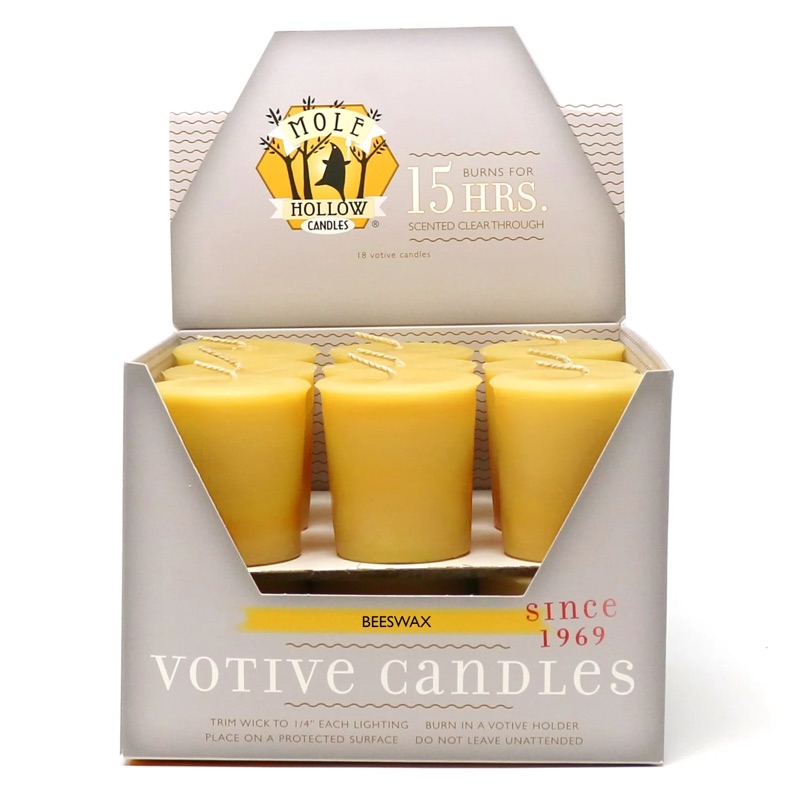 Mole Hollow Candles
 Beeswax Votive Candles, box of 18 (natural)
Eighteen unscented votives of undyed, unprocessed USA beeswax on cotton wicks from a family maker in Massachusetts, about $0.30 an hour. We found no test of the wax, the box is $82 up front, and all sales are final. -
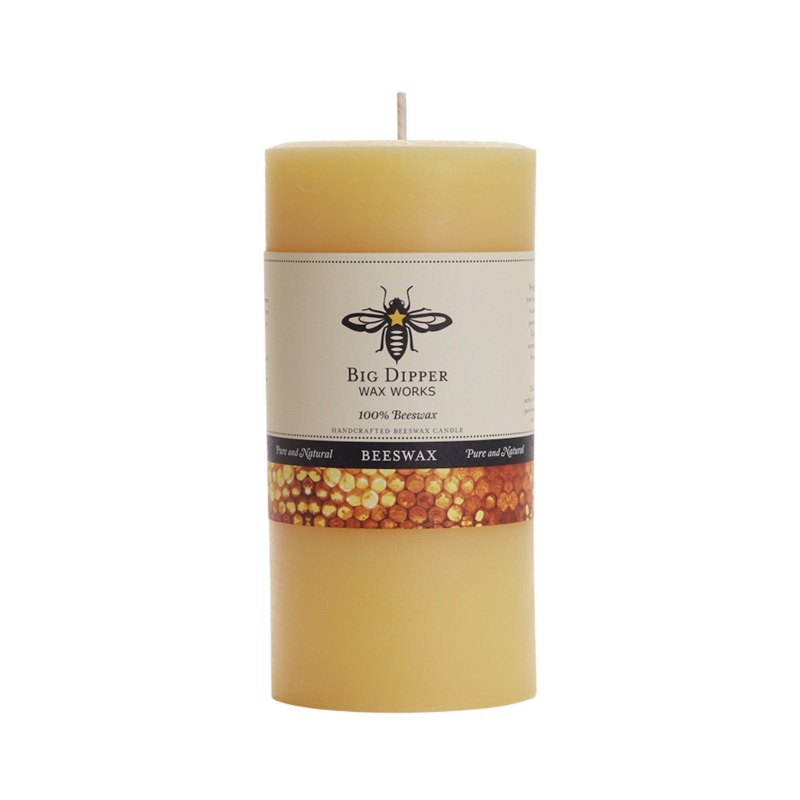 Big Dipper Wax Works
 Pure Beeswax Pillar Candle, Large (3 x 6 in), Natural
An undyed, unscented pillar of 100% beeswax on a cotton wick, hand-poured in Atlanta, at about $0.36 an hour. We found no test of the wax, and the maker’s “nontoxic” and “bloom proves purity” claims are untested. -
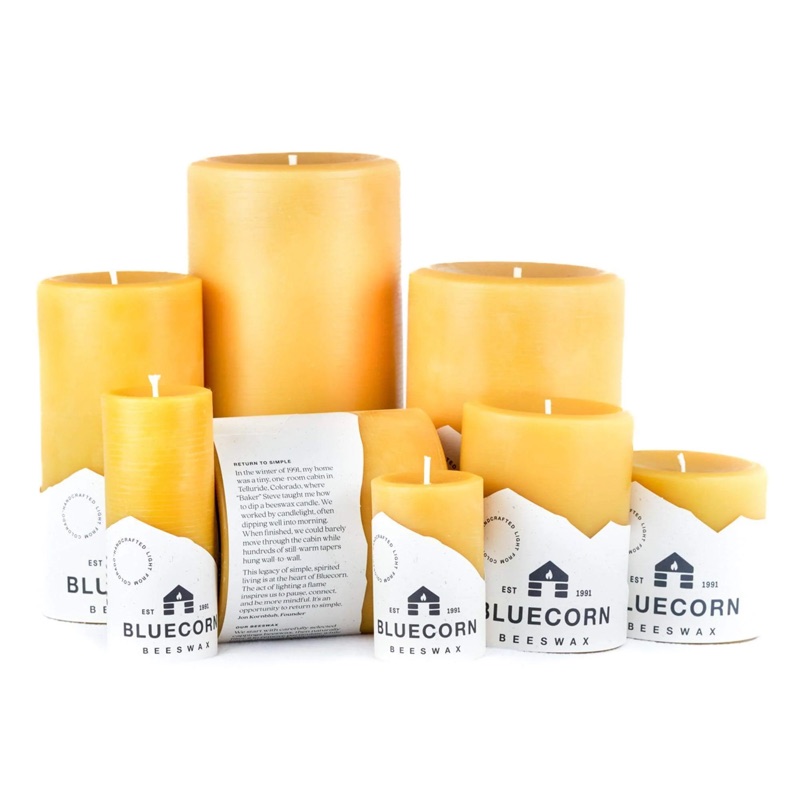 Bluecorn Candles
Bluecorn Pure Beeswax Pillar Candles (raw, unscented)
Raw, unscented beeswax pillars from U.S. beekeepers on a cotton wick, the cheapest of our four candles to burn. No test of the wax has been published, and the “non-toxic” and “clean burning” claims are the maker’s own. -
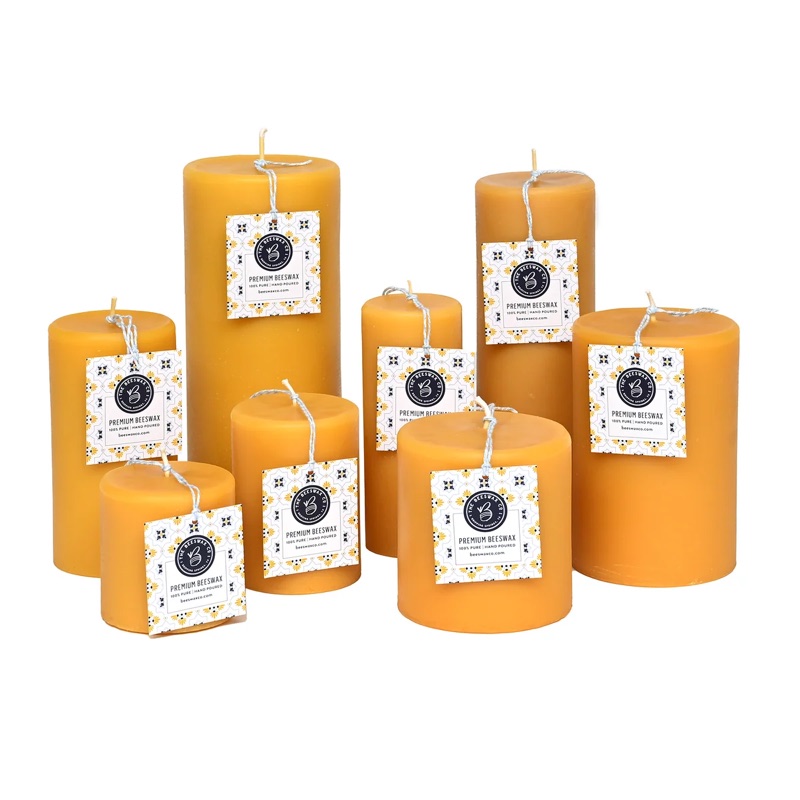 The Beeswax Co.
 Pure Beeswax Pillar Candles
Unscented Texas beeswax pillars on cotton wicks, filtered without bleach, made since 1997. The wax is untested by anyone, and the FAQ says the candles release negative ions that clean the air, which we found no evidence for. -
 Branch Basics
 Beeswax Candle
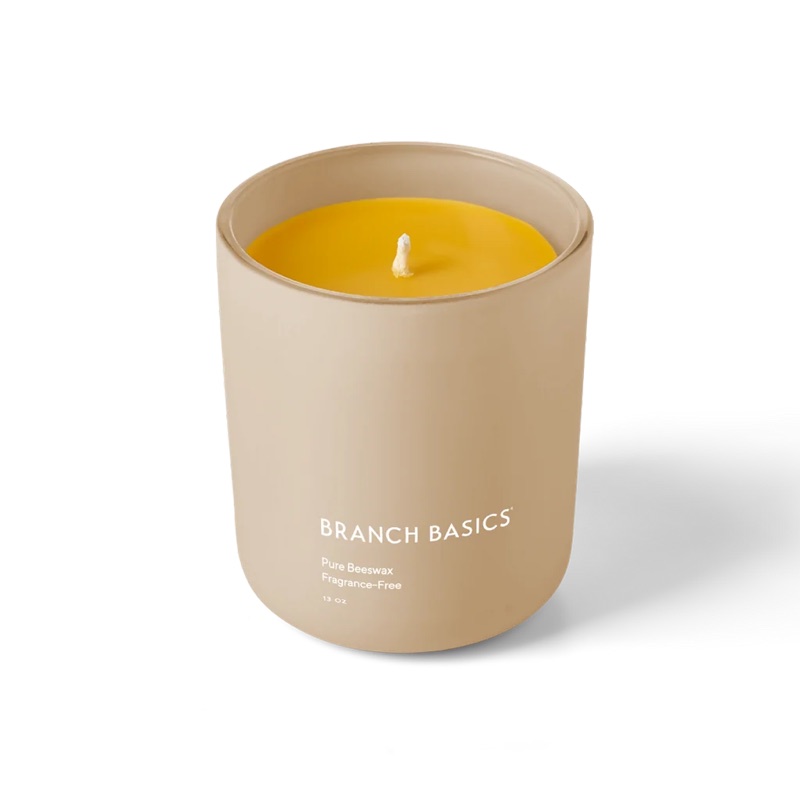
A fragrance-free jar of 100% beeswax on an organic cotton wick, listed by MADE SAFE. The dearest candle we list at about $1.23 an hour, and its “no toxic chemicals” claim has no emissions test behind it. MADE SAFE Certified (ingredient screening) -
 Fontana Candle Co.
 Pure Unscented Jar Candle
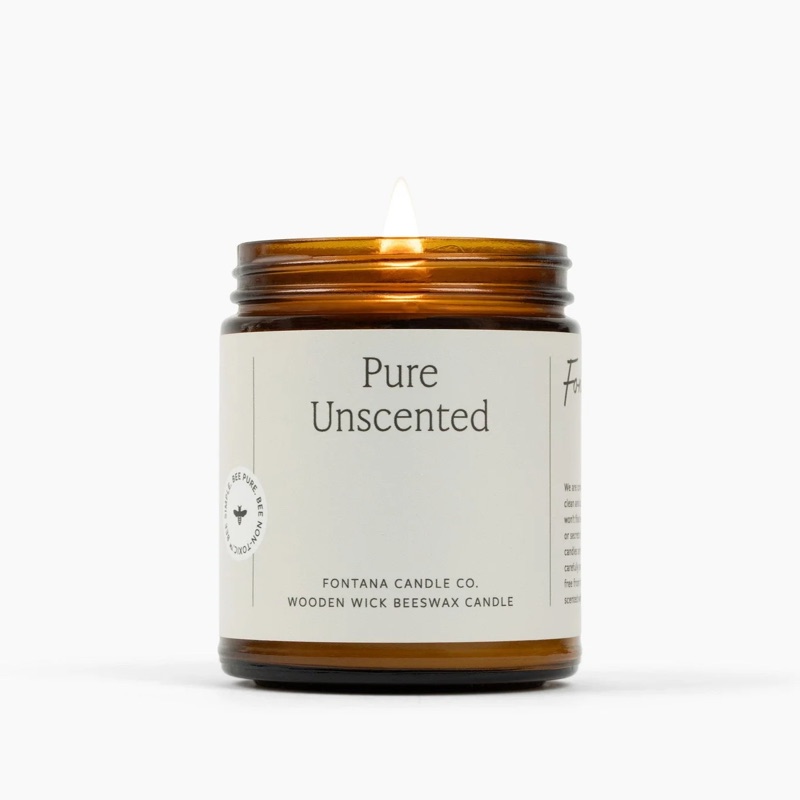
An unscented beeswax and coconut oil jar candle on an untreated wooden wick, listed by MADE SAFE. Our checklist asks for one named wax; this is a two-wax blend with no percentages, which we have asked Fontana to give. MADE SAFE Certified (ingredient screening)