Mushroom supplements
Mushroom powders and extracts that say which part of the mushroom they use and measure what is in it.
How we rank mushroom supplements
- What is in it 25%
- Independent testing 35%
- Evidence 15%
- Trust 10%
- Value 15%
Why, and what each one means
Mushroom supplements differ most in what is in the capsule. Fruiting-body extracts carry the beta-glucans most research is about, while mycelium grown on grain can be mostly starch, so contents and testing carry the most weight: beta-glucan by a named method, starch and metals, ideally from a lab the maker does not pay. Human evidence is thin: our lion’s mane page counts two small trials, and a 2025 review found five (PubMed (opens in a new tab)). See mushroom basics.
- What is in it 25%
- Fruiting body extract with the beta-glucan content stated. Mycelium grown on grain, which is mostly starch, costs points.
- Independent testing 35%
- Beta-glucan, starch and heavy metal results per batch, published. Independent tests count most.
- Evidence 15%
- Human research for this species and form at this dose, and claims that stay within it.
- Trust 10%
- Highest when the maker names everything, answers questions, and has no recalls, warning letters, Prop 65 notices or lawsuits over safety or labeling. Points come off for unresolved problems and for paid promoters it does not disclose.
- Value 15%
- Price per gram of extract against the others here that pass.
Each product scores every one from 1 to 5, and its rating is the weighted average. We list only products rated 3 or above that break none of our rules.
We avoid
- “Full spectrum” or “mycelium on organic grain” labels that do not report starch.
- Polysaccharide figures with no method named, which can count starch.
- Several mushrooms under one blend total, with no amount for each.
- Claims to treat cancer, anxiety, dementia or any other disease.
Read the research
Know one that fits? Suggest a product
5 products · best rated first
-
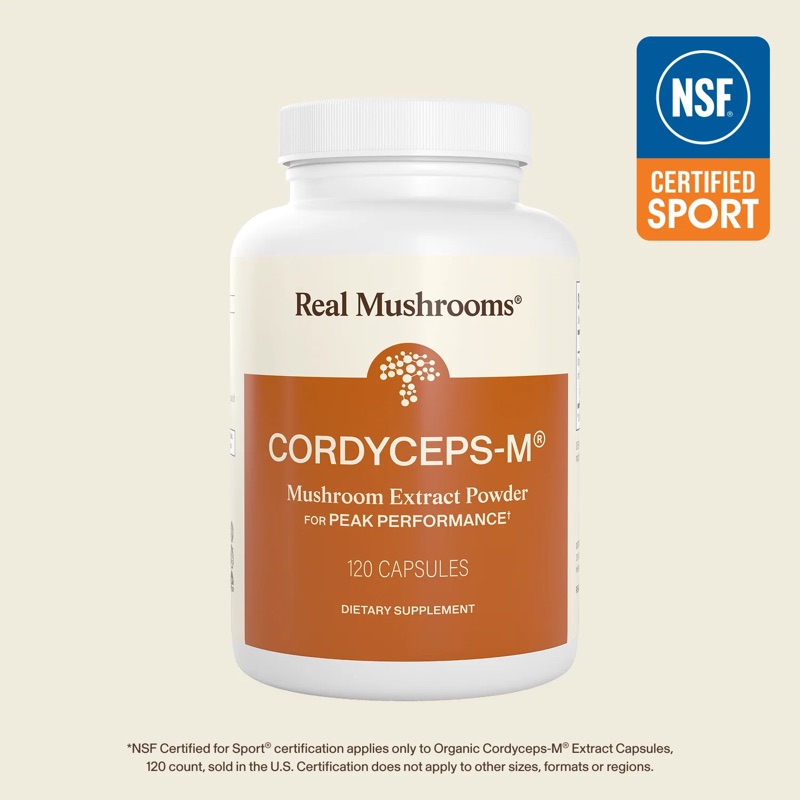 Real Mushrooms
 Organic Cordyceps-M Extract Capsules
A Cordyceps militaris extract with a short label, an NSF Certified for Sport listing and an SGS Canada report on the capsules (beta-glucan 17.2%, metals low, no pathogens). It gives no cordycepin figure, and the exercise trials were small. NSF Certified for Sport (capsule, 120 count, lot 012026228) · Purity-IQ Certified Authentic (Cordyceps militaris; identity by NMR) -
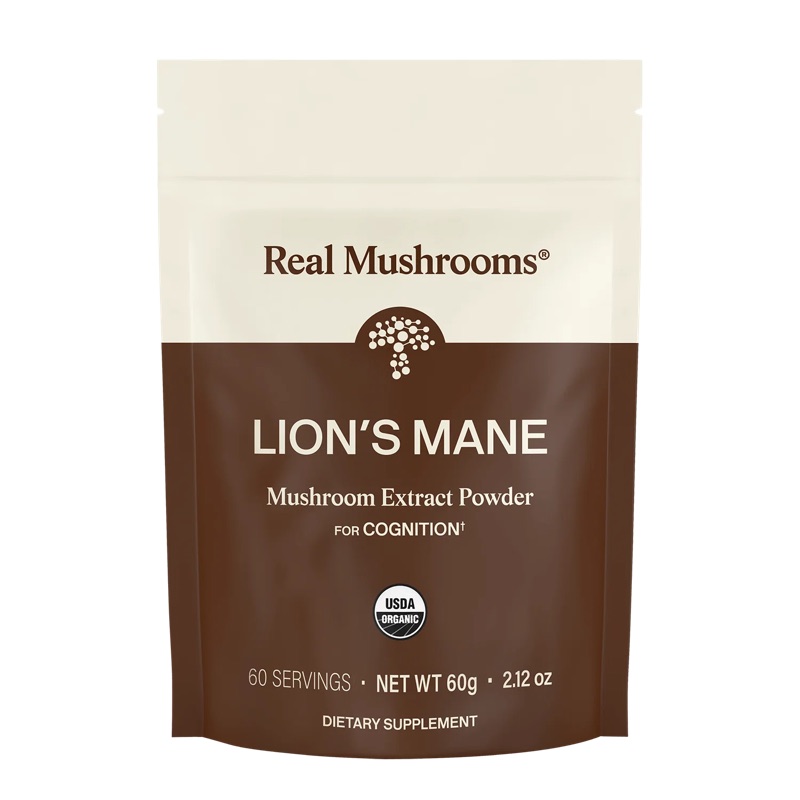 Real Mushrooms
 Organic Lion’s Mane Mushroom Powder
One ingredient: a hot-water lion’s mane fruiting-body extract. Three SGS Canada reports show beta-glucan of 30.5% to 41.0%, low metals and no pathogens, and one a low alpha-glucan figure. The maker ordered and chose the samples. Purity-IQ Certified Authentic (Hericium erinaceus; identity by NMR) -
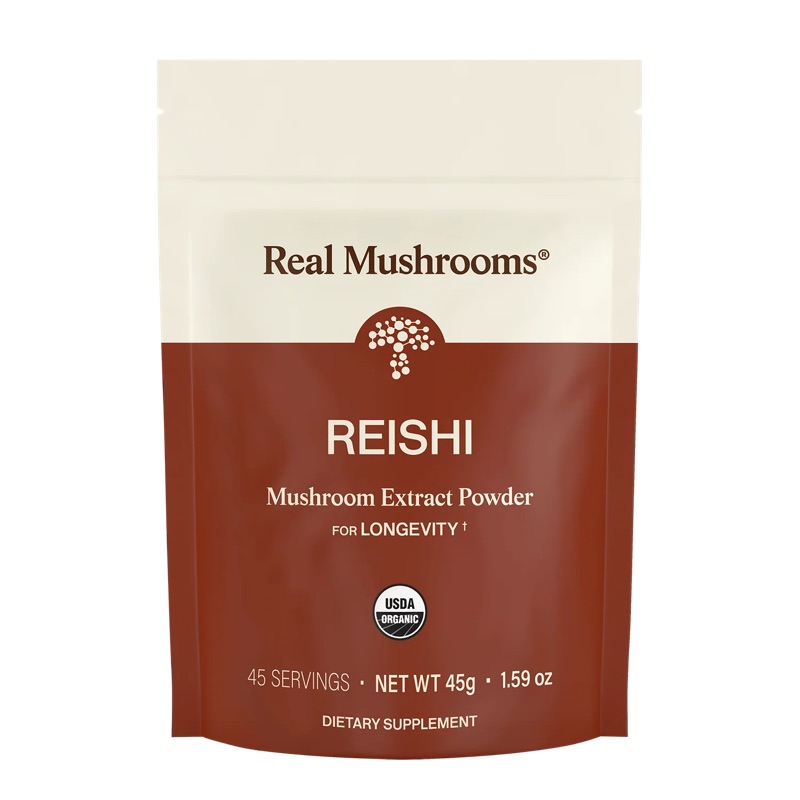 Real Mushrooms
 Organic Reishi Mushroom Extract Powder
A one-ingredient dual-extract reishi (hot water, then alcohol) that states beta-glucan (250 mg) and triterpenoids (40 mg) a gram. An SGS report on its page measured 30.5% beta-glucan and low metals; triterpenes were not measured. Purity-IQ Certified Authentic (Ganoderma lingzhi; identity by NMR) -
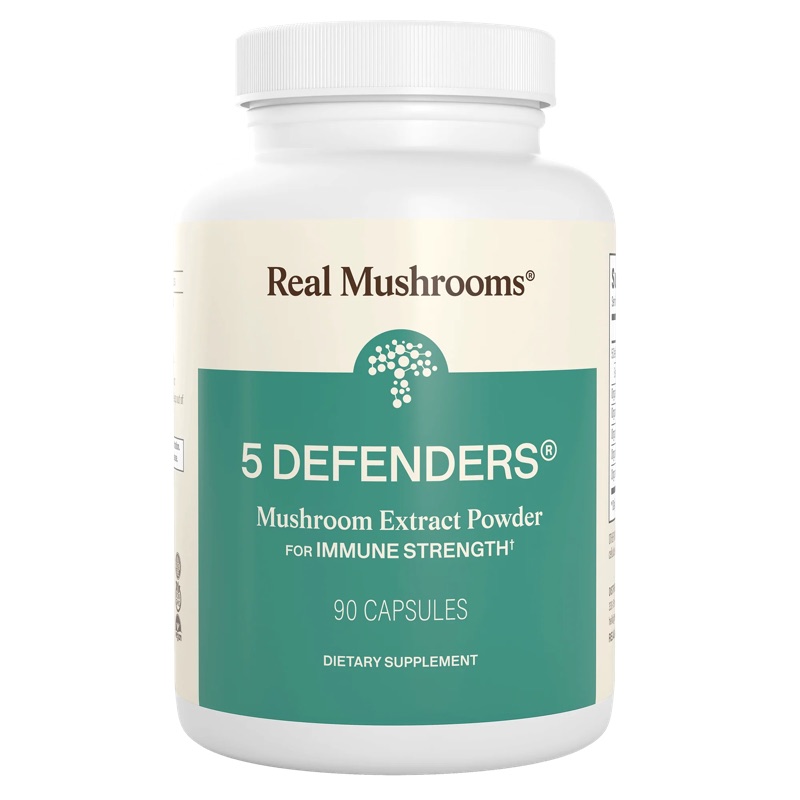 Real Mushrooms
 5 Defenders Organic Mushroom Blend Capsules
A five-mushroom extract capsule with 180 mg of beta-glucan a serving, an NSF Certified for Sport listing and two SGS Canada reports. The label does not split out each mushroom, and no trial has tested the blend as a whole. NSF Certified for Sport (capsule, 90 count, lot 051226225) · Purity-IQ Certified Authentic (all five species; identity by NMR) -
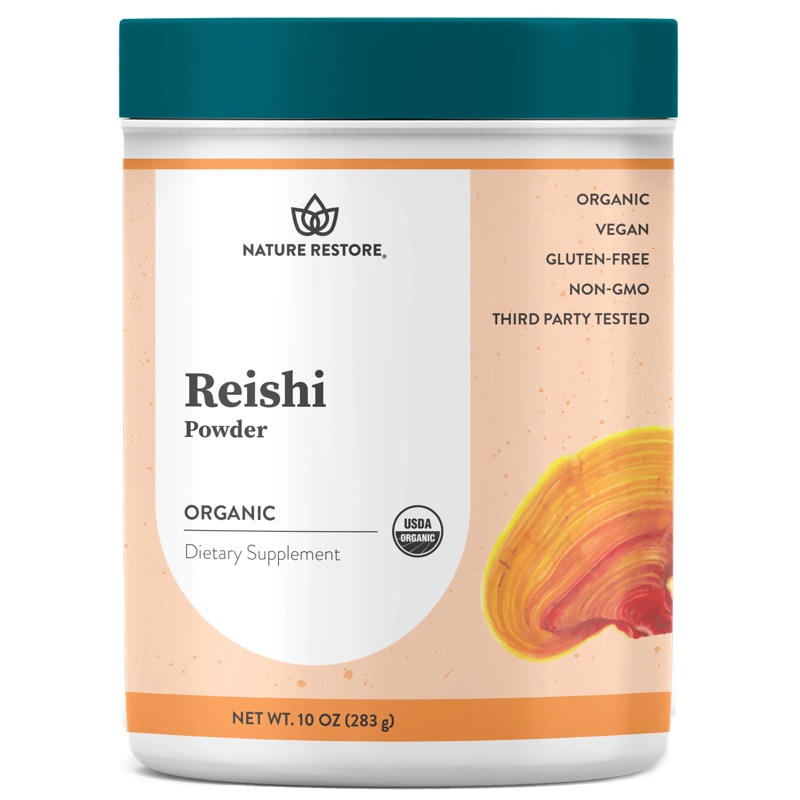 Nature Restore
 Organic Reishi Mushroom Powder
A one-ingredient organic reishi powder, the cheapest here, with two maker-posted metals reports for one lot: lead is 0.32 to 0.47 µg per 3 g serving, under the 0.5 µg Prop 65 level. Not an extract; no beta-glucan or microbe results. USDA Organic (Organic Certifiers, Inc.)