Grains & flour
Whole and heritage grains, grown organic and milled by people who say where and how.
How we rank grains & flour
- Ingredients 25%
- Independent testing 25%
- Sourcing & freshness 20%
- Trust 10%
- Value 20%
Why, and what each one means
We rank flour on what is in the bag and what has been measured in it. Organic describes how grain was grown, not what the flour contains, so tests by labs the maker does not pay count most; only Jovial’s all-purpose einkorn has them. Whole grain keeps the bran: each 90 g a day went with lower heart disease risk in 45 cohort studies (opens in a new tab), and sifting removes some (see ancient wheats). Einkorn still has gluten and is unsafe with celiac disease (opens in a new tab).
- Ingredients 25%
- One ingredient, certified organic, with nothing added or enriched.
- Independent testing 25%
- Glyphosate, heavy metal and mycotoxin results for the grain, published, from a lab the maker does not pay where possible.
- Sourcing & freshness 20%
- A named farm or region, and a milled-on date for flour.
- Trust 10%
- Highest when the maker names everything, answers questions, and has no recalls, warning letters, Prop 65 notices or lawsuits over safety or labeling. Points come off for unresolved problems and for paid promoters it does not disclose.
- Value 20%
- Price per pound against the others here that pass.
Each product scores every one from 1 to 5, and its rating is the weighted average. We list only products rated 3 or above that break none of our rules.
We avoid
- “Gluten-friendly” or “easier to digest” claims. Einkorn and spelt contain gluten and are not safe with celiac disease.
- Blends that put the ancient grain first on the front but are mostly modern wheat.
- Whole-grain flour with no mill or pack date.
Read the research
Know one that fits? Suggest a product
5 products · best rated first
-
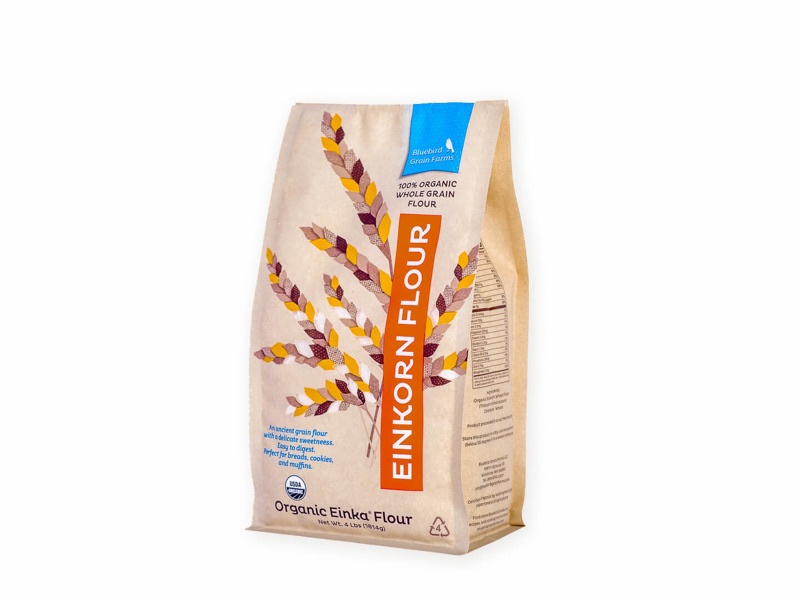 Bluebird Grain Farms
 Organic Einkorn (Einka) Flour
Whole-grain einkorn flour milled weekly on a Washington farm that names its growers. Organic by USDA record. No lab results published and no independent test found. Contains gluten; not safe with celiac disease. USDA Organic (WSDA) -
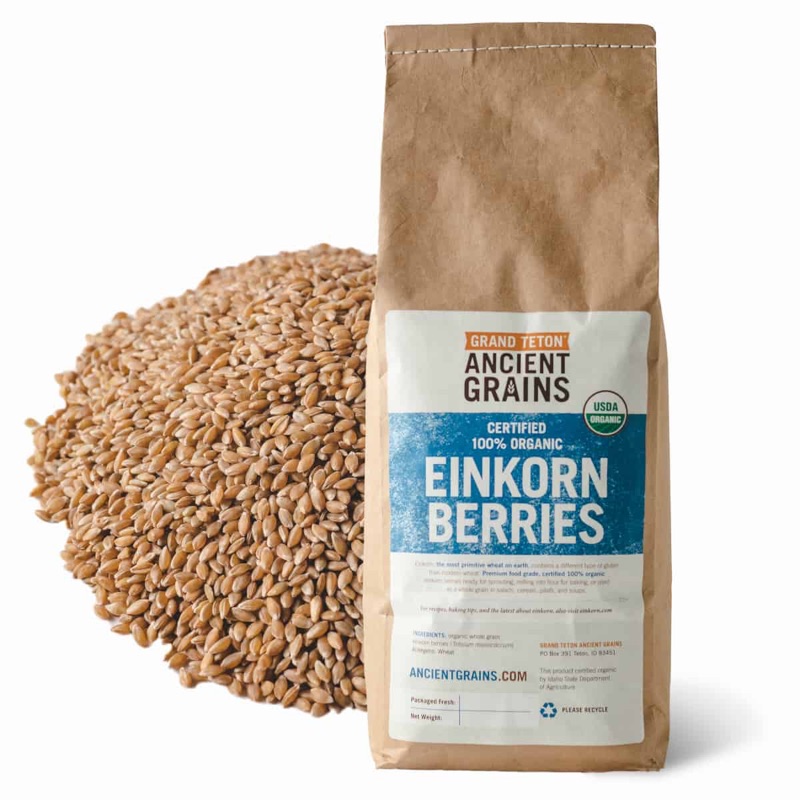 Grand Teton Ancient Grains
 Organic Einkorn Berries
Whole organic einkorn berries from an Idaho family farm and mill, among the cheapest per pound we list. Organic by USDA record. The glyphosate-free claim is the maker’s own and no lab result is published. Contains gluten. USDA Organic (ISDA) -
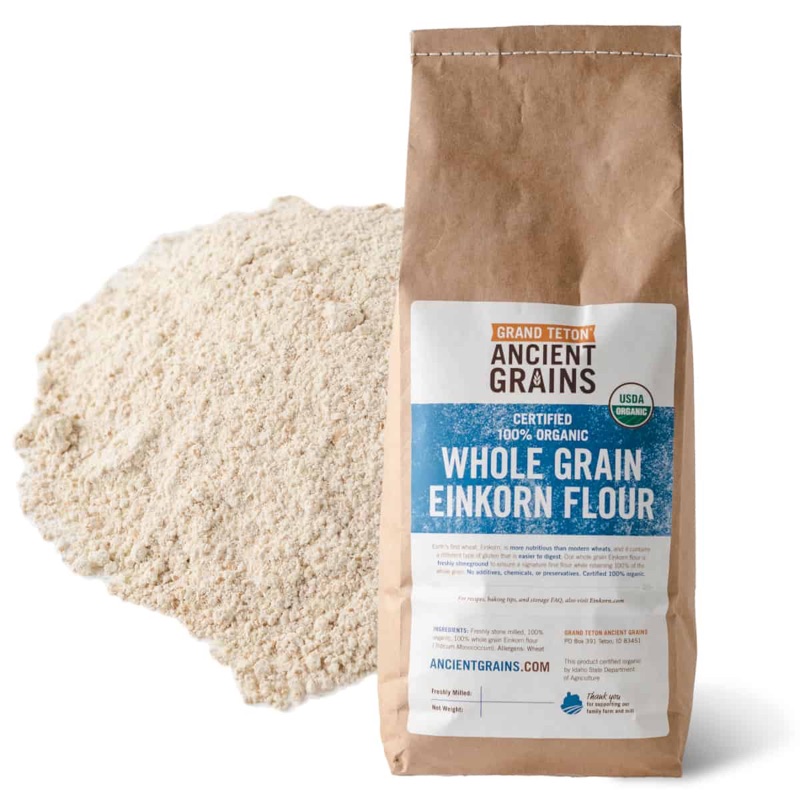 Grand Teton Ancient Grains
 Organic Einkorn Whole Wheat Flour
Stone-milled einkorn flour from an Idaho farm, the cheapest per pound we list. One ingredient, organic by USDA record. No lab result is published for this flour, and its page contradicts itself on whole grain. Contains gluten. USDA Organic (ISDA) -
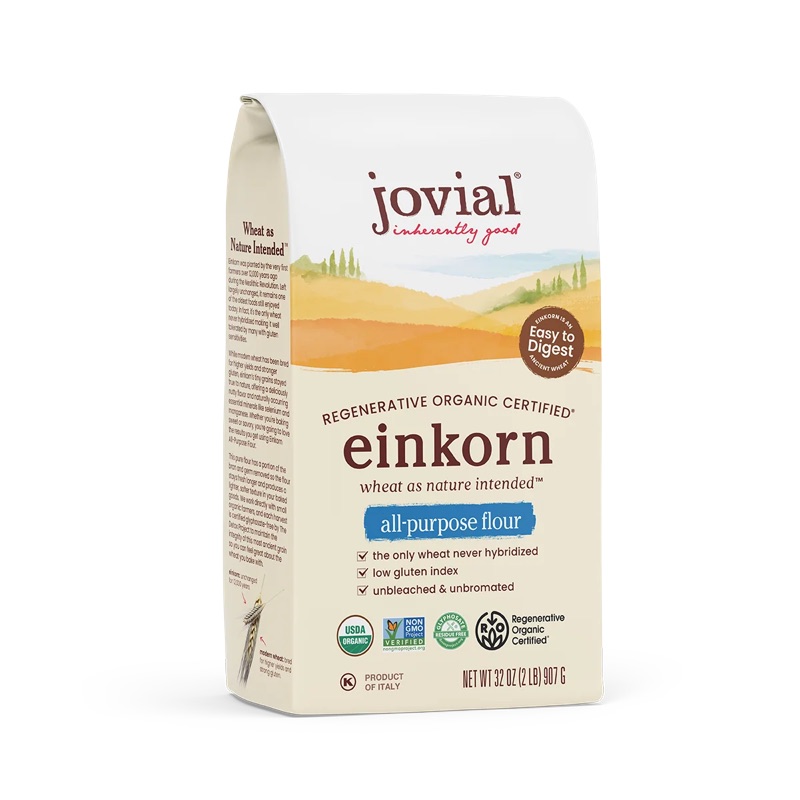 Jovial Foods
Jovial Organic Einkorn All-Purpose Flour
Sifted einkorn flour from organic farms in Italy. Outside labs found no glyphosate in 2026, and no lead or cadmium in 2024 but traces just above the limit in 2025. Not whole grain. Contains gluten; not safe with celiac disease. USDA Organic (QAI) · Detox Project Glyphosate Residue Free · Regenerative Organic Alliance directory listing -
 Jovial Foods
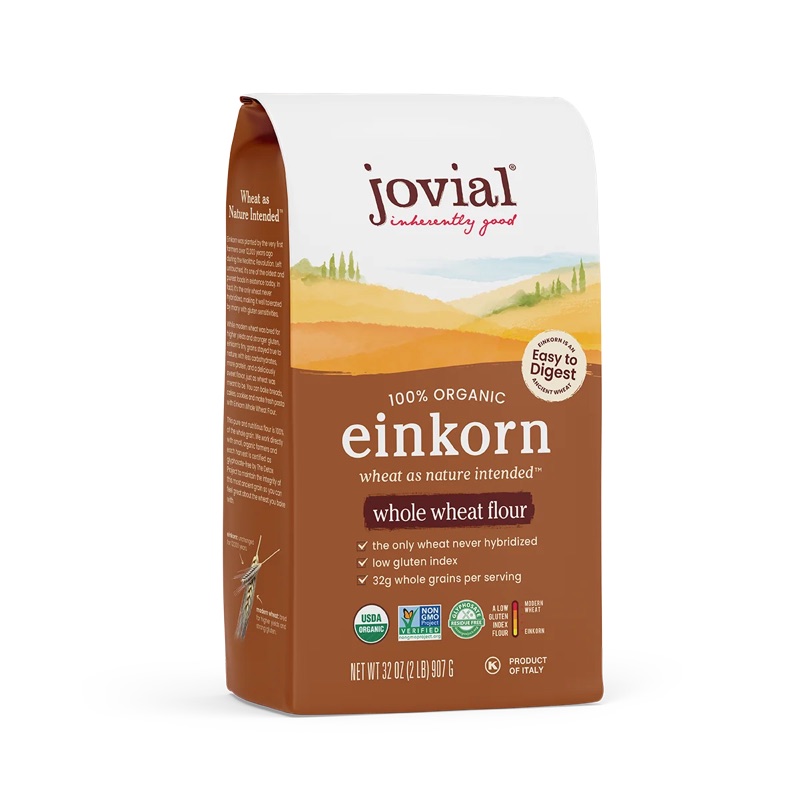
Jovial Organic Einkorn Whole Wheat Flour
Whole-grain einkorn flour from organic farms in Italy, one ingredient. A paid certification lists it glyphosate residue free; outside labs tested its all-purpose sibling, not this flour. Contains gluten; not safe with celiac disease. USDA Organic (QAI) · Detox Project Glyphosate Residue Free · Regenerative Organic Alliance directory listing