Salt & minerals
Unrefined salts with dated lab results and honest mineral claims.
How we rank salt & minerals
- Ingredients 25%
- Independent testing 35%
- Packaging 10%
- Trust 15%
- Value 15%
Why, and what each one means
Testing carries the most weight because the problem with salt is contamination, not minerals. Mamavation’s lab found lead in 96% of the first 23 salts it tested, and a 2018 study (opens in a new tab) found up to 1,674 microplastic particles per kilogram in sea salts, with one outlier at 13,629. The trace minerals in unrefined salts add little (sea salt guide), so we reward clean lead results and a one-ingredient label over mineral claims.
- Ingredients 25%
- Salt and nothing else: no anti-caking agents, dextrose or added iodide carriers.
- Independent testing 35%
- Lead and microplastics measured in the salt, by someone the maker does not pay where possible, with results published.
- Packaging 10%
- Glass, paper or a pouch without a plastic liner where it can be.
- Trust 15%
- Highest when the maker names everything, answers questions, and has no recalls, warning letters, Prop 65 notices or lawsuits over safety or labeling. Points come off for unresolved problems and for paid promoters it does not disclose.
- Value 15%
- Price per pound against the others here that pass.
Each product scores every one from 1 to 5, and its rating is the weighted average. We list only products rated 3 or above that break none of our rules.
We avoid
- “Detox”, “alkalizing” or “balances your body” claims.
- Lab reports with no lab name, date or sample ID.
- Colored or flavored salts that do not list every additive.
Read the research
Know one that fits? Suggest a product
4 products · best rated first
-
 Diamond Crystal
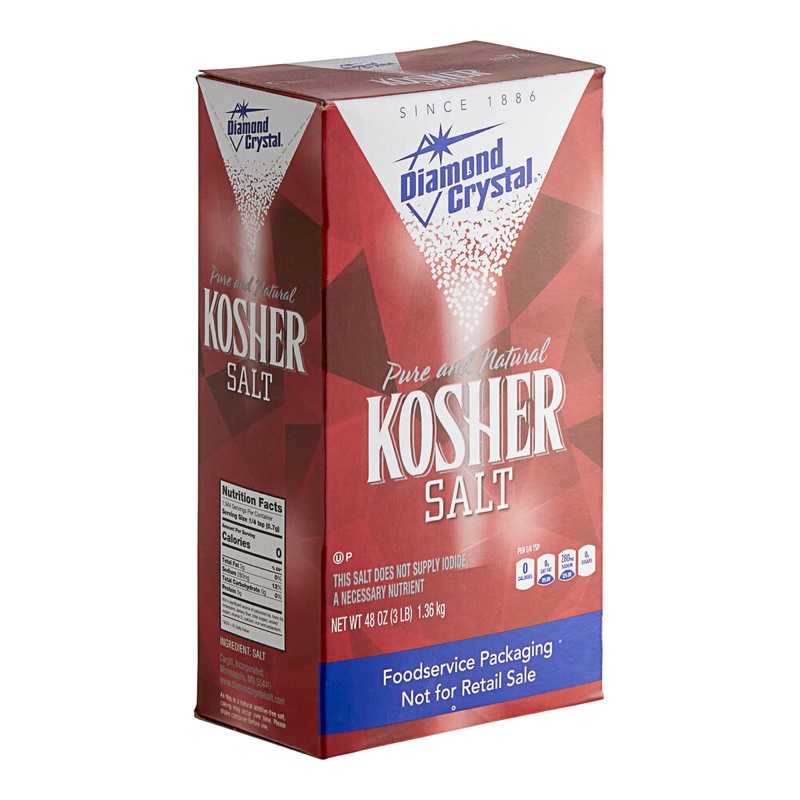
 Kosher Salt (3 lb box)
Plain kosher salt with nothing added. Two independent labs found no lead, and Lead Safe Mama’s also found no cadmium or mercury. About $4 a pound, the cheapest clean salt we found. The carton it tested was foodservice stock. -
 Jacobsen Salt Co.
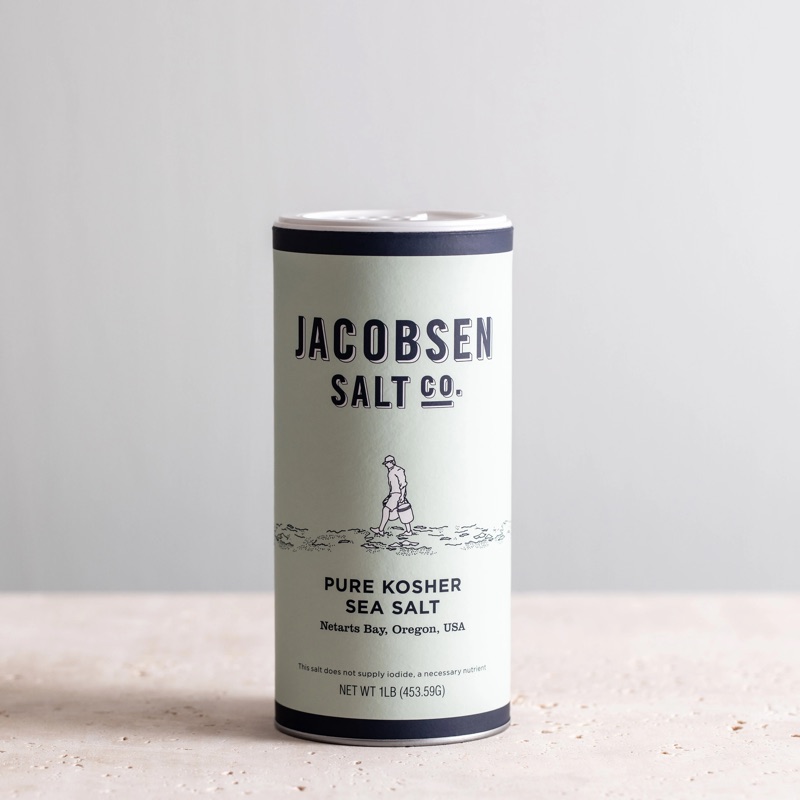
 Pure Kosher Sea Salt (1 lb)
Oregon sea salt with one ingredient. Independent labs found no lead, cadmium or mercury in 2024 and again in 2025. It is about $13 a pound, no one has published a microplastics count, and the maker was out of stock on 23 Oct 2026. -
 Kirkland Signature (Costco)
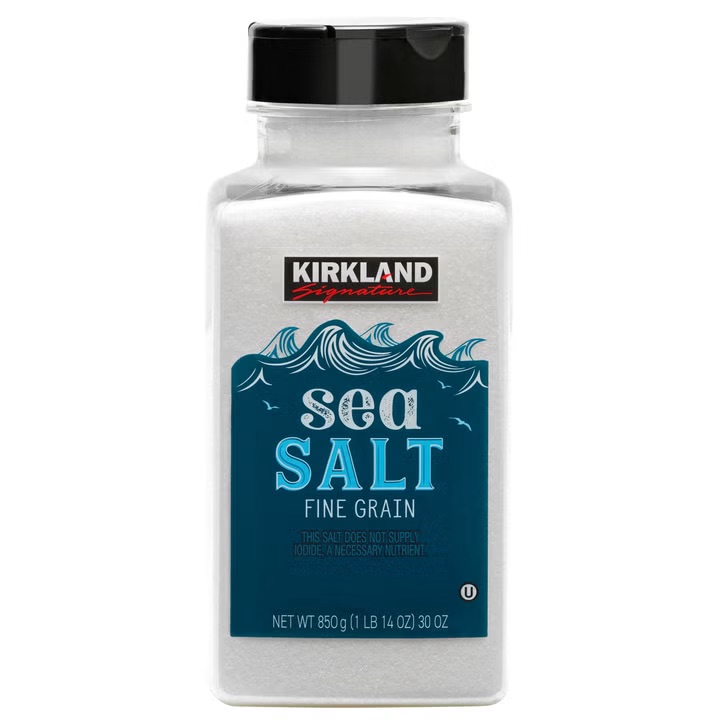
Kirkland Signature Pure Sea Salt, fine grain, 30 oz
Sea salt and nothing else, at about $2 a pound. Mamavation’s lab found no lead or cadmium in a Kirkland fine sea salt and arsenic and mercury below its limit. It is one test, the maker names no producer, and the bottle is plastic. -
 Maldon
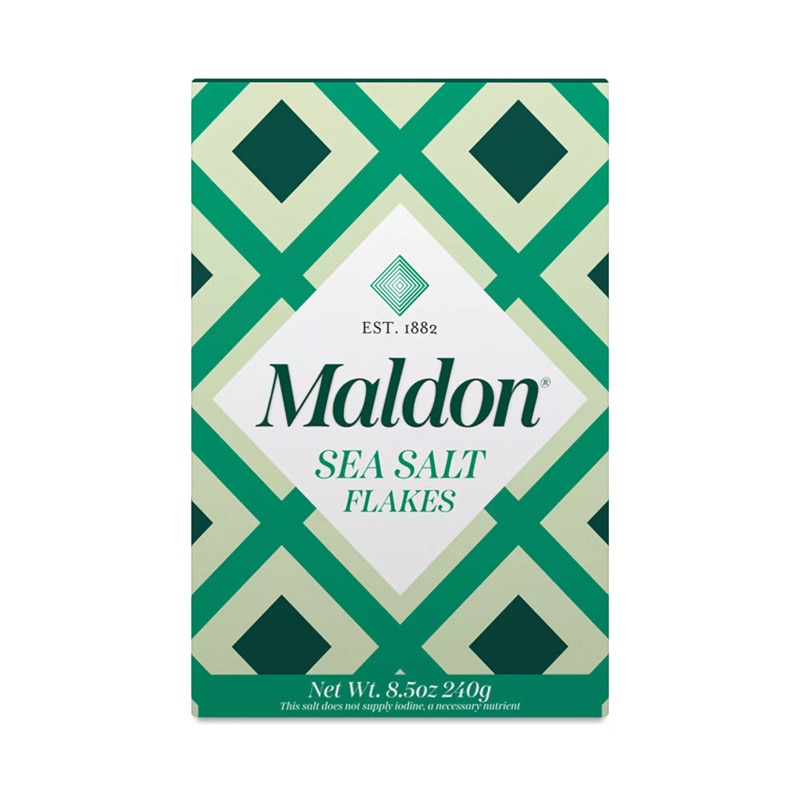
 Sea Salt Flakes (8.5 oz box)
Flaky English finishing salt with one ingredient. Two US labs found no lead above 5 ppb in 2025, but a 2023 Italian study reported far more and Maldon has kept its own report private. About $13 a pound, in a plastic-lined box.